Get your flow on

Do you ever become so absorbed in an activity that you lose sense of time and space and get lost in what you’re doing?  Chances are you’re experiencing flow!

Flow happens when we are fully engaged in an activity.  We feel in control –  it’s like time stops, and you get swept up in the activity you’re doing – no more thinking about the housework, or what to eat for dinner – you’re well and truly engaged in the task at hand!!  It might happen when we’re performing a hobby like reading or yoga, or it might happen when you’re working on a task that is challenging, like an important work task or university assignment.

There are many psychological benefits to experiencing flow!!  These include increased well-being, greater work/life satisfaction, reduced stress and anxiety, greater sense of self, increased productivity and increased self esteem.  Short term, we’re likely to experience feelings of pleasure, happiness and satisfaction.

flow and wellbeing

So what are the key elements that make flow happen!?

  • Participating in an activity that challenging and uses your skills to the fullest! If the task is too easy, or too difficult, then flow is unlikely to occur.    With this in mind, thinking about your strengths and what you are good at, might help you to choose activities that lead you to experience flow.
  • Having clear goals – is your goal to practise a 30 minute set list to be able to play those songs with confidence at tonight’s gig?  Is it to conduct research on positive psychology to write a university paper?  To spend one hour at the gym to relax?  Whatever it is, make it clear and measurable and think about what the purpose of your activity is.  Think about what you need to achieve your goal including resources, and when and where you will carry out your flow enhancing activity.
  • Having clear and immediate feedback – can you assess your performance as you complete the task?  If not, can you engage in reflection following the activity to think about what you did well or could improve on?  Can a coach,supervisor or mentor give you feedback from observation?

With this in mind, which activities do you get lost in?  It might be playing sport, playing a musical instrument, reading a book (or even, I hate to say….a work task!!).  Can you find a way to engage in this activity every day?  Whilst you might feel like you don’t have time to do things you enjoy, the positive effects of experiencing flow are likely to make you feel happier and more productive when doing the mundane stuff!!

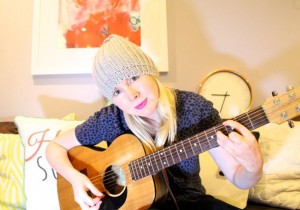
Doing this post made me realise how much I miss picking up my guitar…it’s amazing how time disappears when you’re doing something you love!!  How can you make more time for flow enhancing activities?

flow and wellbeing


Lipstick: Mac - Pink Pigeon

Positive Ageing

The thought of ageing is a scary concept for many of us.  We’re constantly bombarded with messages about the beauty of youth, and the concept of old age is regarded by many as a time for dependency and losing the ability to enjoy the things one previously loved.

The way we age however, is heavily shaped by our perceptions around ageing.

Research in the field of positive psychology is extending to examine well-being during old age.  Research by psychologist Carol Ryff describes the most important criteria for being well adjusted during old age as:

  • Being socially responsible and interested in others
  • Having the capacity to accept change
  • Being compassionate, caring and responsive to others

Harvard Professor of Psychiatry, Dr George Vaillant, in his book Positive Ageing, conducted research which followed 824 people for 60 years, from teen years to becoming grandparents! Based on this, Valliant outlines several predictors, which if adhered to before the age of 50, can lead to good physical and mental health at ages 70, 80 and beyond:

  • Positive relationships, including a good marriage
  • Alcohol used in moderation only
  • Creativity and playfulness
  • Learning to make younger friends and form new relationships as older friends are lost
  • Pursuing education and achievement
  • Ability to find creative ways to cope with difficult situations
  • Altruistic behaviour
  • Staying physically active
  • Being a non-smoker
  • Having a healthy weight

Some amazing research was done by Ellen Langer, Harvard Psychology Profession, in her “Counter Clockwise” study.  Dr Langer had elderly men in their 70’s and 80’s attend a one week retreat where they were required to live like it was 1959!!  The study involved the men reading only material from the time of 1959 or before, discussing the politics of the time and writing letters as their younger selves in 1959 to share with the other participants.  At the end of the study, the men were evaluated as appearing taller, having better posture, having higher scores on intelligence tests and being perceived as younger by others viewing photographs of them.  The researcher, Dr Langer, even reported that at the end of the week she was playing football with elderly men who had previously been walking with canes!!  Some of the men who had been dependent on family members to help them with many activities of daily living were functioning independently during the retreat, including helping with meals and tidying up.

What amazing evidence to show that having a “young” mindset can have massive impacts of the physical body!!

Will you continue to maintain a “young” mind as you age?  Do you have grandparents/parents/friends/relatives who have achieved amazing things in their old age?  I would love to hear your stories!!