Build your confidence

5 Simple Tips to Build Unshakable Confidence

I can confess that on many occasions I’ve missed out on fantastic opportunities for fear of failure or rejection.  Low confidence can hold us back from achieving our goals and living our dreams.  Confidence is not an easy thing to build.  Sometimes, depending on the circumstance, our confidence can fluctuate.  In today’s world, we’re often comparing ourselves to others which leads us to focus on the things we don’t have.

Today’s article shares 5 simple tips based on research, which may help you to build your confidence and to smash your goals!

Self confidence

Watch the YouTube version of this post by clicking here.  

Tip 1#:  Change your body language 

Our body language plays a powerful role in how we feel. Have you ever noticed that when you’re feeling nervous or shy, that your posture changes…we may hunch our shoulders, fold our arms or fidget..we might look at our phones in an effort to appear busy…. We may even talk faster or more quietly.  Social Psychologist Amy Cuddy states that powerful people are more assertive and more confident – powerful people use more open and expansive postures, they make themselves bigger through taking up more space, and may take up more time by speaking slowly and clearly.

Amy Cuddy offers an easy life hack to change your confidence, simply by changing your posture for just two minutes. She calls this Power Posing.   Power posing involves spending two minutes holding a powerful postural pose – such as the classic Wonder Woman pose.  Cuddy’s research has demonstrated that when people hold power poses for two minutes, they feel more confident.  Before you go into a stressful situation, such as a job interview or difficult conversation, sneak into a private space and spend two minutes holding a power pose.

When you enter the situation, you don’t need to hold the power pose by any means, but be mindful of your body language– focus on keeping your shoulders back and chest forward, making eye contact, use open gestures and avoid collapsing your arms or wringing your hands.  You can even try using props to keep your arms from collapsing in – for example, holding an object, or placing your hand on the desk to force yourself to stretch out, rather than collapse in.  Speak slowly and clearly and avoid rushing through what you’re saying.

Cuddy states  “Don’t fake it til you make it…fake it until you become it!”


Tip #2:  Stay present in the moment

Often when we feel less confident, our focus drifts away from the situation itself, and turns inwards. Rather than being present in a conversation, you may be busy thinking about what you’re going to say next, or whether you have anything interesting to contribute to the conversation.  However, when this happens, we appear less present and distracted, and others may perceive that we’re not interested in talking to them.  Practice using active listening skills, and genuinely listening to what the other person has to say.  When we listen and engage we appear more present, and confident.  Maintain good eye contact, show the person you are listening but acknowledging what they’re saying, and ask them questions about their experience to show you are engaged.  If we’re nervous in a social setting, we may reach for our phones in an attempt to look busy, but this may make others perceive you as uninterested in the situation, so avoid the temptation to look at your phone!

Don’t underestimate the power of distraction – feeling like you’re drifting off into your own thoughts or insecurities?  An easy way to get present is to spend a few minutes to use your senses – notice 5 things you can see in the room, 5 sounds you can hear, and 5 things you can touch or feel.


Tip #3: Make self-care a priority

Increase your positive health behaviours – exercising on a daily basis and eating a nutritious diet can help us to feel more confident.  When we feel at our best physically, we feel more confident.  When we exercise regularly, it increases levels of feel good chemicals including serotonin and endorphins  and also helps us to reduce stress levels.

A 2016 study published in the Journal of Neuropsychiatric disease and treatment showed that there is a direct link between physical exercise and self-esteem.  The study also showed that participants who regularly engage in physical activity, not only have higher self-esteem, but have a better sense of body image, through the opportunity to increase strength and muscle tone and to improve flexibility, strength and balance.

Don’t forget to get adequate sleep and to nourish your body with healthy food!


Tip #4:  Stop comparing yourself to others

Do you compare you compare yourself to others?  Many of us compare our looks, our possessions, our jobs and salaries with those around us.  This can lead us to feel like we’re not good enough and reduce our confidence.   When we compare ourselves to others, we often experience envy.

A 2018 study published in the journal of Personality and Individual Differences showed that envy is associated with self-esteem instability and that the more envy we experience, the worse we feel about ourselves!

Next time you find yourself comparing yourself to someone else, or experiencing envy, remember that self-comparison reduces our confidence and leads us to focus on what we don’t have…not what we do have.  Stop and reflect on your own strengths and achievements.  A simple tool you can try to improve this is to create a list of your strengths, achievements and the things you are grateful for.  Try and add to your list regularly and keep is somewhere where you can easily read it.


Tip #5:  Practice having self-compassion

Remember that we all make mistakes, and as humans, all of us have had experience in saying the wrong thing, making mistakes…none of us are perfect but in today’s world, many of us develop unrealistic or perfectionistic standards for ourselves.  When we hold incredibly high standards for ourselves, often we can be our own worst critics if we make a mistake or fail sometimes.   For perfectionists, even when a task is completed, they may focus on the things they don’t think they did well.

Psychologist Kristen Neff suggests practicing self-compassion as an alternative to chasing self-esteem.   Our self-esteem can fluctuate based on what’s happening in our lives, or comparisons to others, which can lead us to feel inadequate.

Self-compassion “is a way to feel good about ourselves which isn’t contingent on others and doesn’t require us to be perfect”. “Treat yourself like you would treat a close friend who was struggling”.  – Kristen Neff.

A 2008 study published in the journal of Personality showed that “self‐compassion predicted more stable feelings of self‐worth than self‐esteem and was less contingent on particular outcomes. Self‐compassion also had a stronger negative association with social comparison, public self‐consciousness, self‐rumination, anger, and need for cognitive closure.”

Here are some simple techniques you can try to cultivate self-compassion:

  • Notice when you’re using negative self-talk, and reframe with compassionate self talk which acknowledges that all humans struggle sometimes.  Try maintaining a focus on the things you have achieved or done well, rather than the things you haven’t.
  • In her book “Self-Compassion”, Kristen Neff suggests this simple exercise when you’re experiencing negative emotion.  This could be something you try after experiencing a failure or setback:
    • It’s hard to feel (XXX) right now)
    • Feeling (XYZ) is a part of the human experience
    • What can I do to make myself happier in this moment?

Remember that building your confidence doesn’t happen over night, and is a holistic process that you can approach from many angles.  I hope these tips help you to boost your confidence (and to be kinder and more compassionate to yourself when setbacks come along!)  Don’t forget most importantly to be yourself, own it and make no apologies for who you are!!


References

Journal Articles

https://onlinelibrary.wiley.com/doi/abs/10.1111/j.1467-6494.2008.00537.x

https://www.sciencedirect.com/science/article/abs/pii/S0191886917306499?via%3Dihub

https://www.dovepress.com/physical-activity-and-self-esteem-testing-direct-and-indirect-relation-peer-reviewed-article-NDT

Web Articles 

https://www.verywellmind.com/how-to-boost-your-self-confidence-4163098

Books

Cuddy, A. (2016).  Presence. Orion Books: United Kingdom

Neff, K (2011) Self Compassion.  Harper Collins:  New York


TED Talks

Procrastination

5 Simple Ways to Reduce Procrastination and Improve Time Management

Are you guilty of procrastinating?  Do you spend more time engaging in morning banter by the water-cooler than you do at your desk?  Are you working hard, or are you #hardlyworking!?  We’ve all been there!

Getting focused and achieving the things we need to do can be tough.  In turn, when we procrastinate, this can stop us from achieving key goals.  If procrastinating is so disruptive, why do we do it!?

Many of us blame laziness or lack of care as reasons for procrastination, but often this is far from the case!!

A simple reason as to why we procrastinate, is often because we’re experiencing uncomfortable feelings of stress or anxiety about the task we are avoiding.  We could be worried that the task is difficult, or more importantly, we may be worrying about whether there is a chance we could actually fail at the task.

Often when we feel threatened, it feels easier to avoid (by procrastinating!) than to face the difficult task itself.  Procrastination may even serve as a form of self-sabotage if it starts to interfere with important life goals.  Research shows that self-sabotage is a strategy we use to protect ourselves from the painful feelings of potential failure.  It’s easy to blame procrastination or “not having enough time” than it is to admit that we genuinely struggled with a task.

Unfortunately, procrastination or avoidance might help us get a feeling of relief in the short term, because we don’t have to face the dreaded task we’re worried about….but in the longer term, our feelings of stress and anxiety often increase when we procrastinate, and we may even start to experience emotions such as guilt and shame if we haven’t achieved the goal we set about to achieve.

So how can we reduce procrastination?  Here are my top five tips to help beat procrastination and get down to business!

  1.  Reflect on your triggers for procrastination.  Do you have a difficult task such as calling difficult customers, having a tough conversation with a colleague or working on a challenging report that you always try and avoid?  Recognising the tasks that cause your anxiety to increase can help you to better manage those tasks.  If you know you have a difficult call scheduled, plan to allow yourself time to prepare, and to take a coffee break after to de-stress and relax before your next task.
  2. Get the most difficult task out of the way first.  Many of us leave the tasks we are dreading until the end of the day…but often when we know we have something really difficult to work on, our anxiety can increase, and we may find excuses simple not to get to the tough task.  Getting a difficult task out of the way quickly will help relieve your anxiety and give you feelings of accomplishment.  You’ll feel better for the rest of the day knowing that it’s out of the way.
  3. Try the Pomodoro Technique.  This technique involves setting a timer for 25 minutes, and focusing on a single task during this time.  Ensure you remain distraction free during this time.  After 25 minutes, you can take a 5 minute break to relax.  See how many Pomodoro’s you can get done in a day!
  4. Write a list of your three most important tasks to complete for the day:  To-do lists can be overwhelming, and often leave us feeling unsure of where to start.  At the beginning of the day reflect on three things that are essential to achieve in the day.  Focus on those three critical things and create a plan for how to best use your time.
  5. Disconnect to minimise distractions:  When attempting to work, we’re often also receiving text messages, emails, Facebook Messages, Whatsapp messages, news blasts, newsletters and all kinds of other alerts.  When working on an important task, try closing your email down for an hour, and turn your phone onto flight mood.  This will allow you to keep your attention where it most needs to be.

Would you try these tips?  What are your most common ways to procrastinate?  Water-cooler banter?  Coffee and cake breaks?  Coming up with pointless busywork to do instead of the actual important work?  I’d love to hear about your favourite procrastination methods!!!

Jemma Doley

My Brand New YouTube Channel Now Live!!

I’m so excited to announce the launch of Pop Therapy TV, my brand new YouTube Channel!!  We went live last night, with a brand new video, all about gratitude!!

The concept of Gratitude is a huge buzz word at the moment….everywhere I go, there are gratitude diaries, apps and people praising the benefits of gratitude….but is there any research to support it can enhance our wellbeing, and in what ways does being grateful do this? This VLOG covers some simple techniques you can try to start your gratitude practice and also explores the dark side of gratitude.

If you would like to watch the VLOG or to subscribe, please head over to:

https://www.youtube.com/channel/UCiBMLWPkJVxy8q_M-wVMBlQ/


Jemma Doley

I’ll be sharing some brand new blog articles with you in the coming weeks!!

Thanks for reading and being a loyal follower of Pop Therapy!!

xox

Jem


Positive communication

How to Create Positive Emotional Spaces

Positivity continues to be buzz word at the moment, but how important is the expression of positivity by individuals in creating positive systems?.  “Being positive” has been touted as the solution for almost every life dilemma/ailment/the cat rang away from home situation you can think of, but is simply expressing positivity like Ed Sheeran releases singles really the answer to creating happiness?  Can the actions of one individual change the dynamics of a relationship, group or workplace environment?

Expression of positivity gained attention through the research of renowned psychologist, John Gottman.  In the 1970s, Gottman began to conduct longitudinal studies examining the differences between happy and unhappy couples.   The researchers asked couples to solve a problem in their relationship in just 15 minutes.  The interactions were filmed and analysed, and amazingly, the researches were able to identify one factor which would predict with a 90% degree of accuracy if the couples stayed together or divorced.

The researchers identified that the key factor which differentiated happy and unhappy couples, was the balance of positive vs negative interactions during conflict.  The magic ratio they identified was 5:1.  For every negative interaction, a happy and stable relationship would also have five positive interactions.  Couples with only a 1:1 ratio, or less, would indicate an unhealthy relationship.

So does this mean that there is a magic number of positive interactions we should have on a daily basis to help our relationships (and ourselves) to flourish?

Research into the “magic positivity number” continued, through the work of Social Psychologist Marcial Losada, who began to look at the role of positive and negative interactions on team performance.  Through his research, Losada discovered that high performing teams have significantly higher positivity to negativity ratios than low performance teams.  He calculated the “Losado Ratio” which is calculated by dividing the sum of positive interactions (“I agree with that,” “great idea!!” etc) in a system by the sum of negative interactions (“I don’t agree with you,” “we shouldn’t even consider that!!” etc).  A ratio of between 3 and 6 was highly correlated with high performance.  In Losada’s study, the highest performing teams showed nearly 6 positive comments for every negative comment that was made.

Do does this mean we should ditch negativity and start praising the crap out of our colleagues/loved ones/strangers in the street!?  “Hello there, your hair looks so shiny today” etc?

Providing negative feedback has an important role in workplaces and relationships, guarding against factors like Groupthink (when a desire for group harmony results in poor decision making) and also complacency or poor performance.  We sometimes need to hear negative feedback to enhance our performance and make positive changes.  Also, if we don’t express our feelings to others, we can run the risk of becoming passive aggressive, or expressing our frustration in maladaptive ways.

The good news is…negative feedback can be given in constructive ways that maintain positive emotional spaces.  Here are a few tips to maintain positivity, whilst also being open and honest about negative feedback:

  1. Identifying mutual goals or areas of common ground when delivering negative feedback can help maintain a sense that you’re both on the same page.  Finding opportunities for agreement even in the midst of a conflict can help buffer the stress of a difficult workplace conversation or an argument with a friend or partner.
  2. Listen to and acknowledge the other person’s perspective.  Just because you don’t agree with someone else’s perspective, doesn’t mean that you can’t show that you’ve heard and acknowledged where the other person is coming from.  Validating or summarising the perspective of the other party will help them to feel heard and understood (i.e, “that makes sense to me, I can see why that was useful for you” etc).
  3. Provide positive feedback about what the person is doing well.  Positive feedback reinforces us to repeat a behaviour.  Acknowledging and praising the things someone is good at is a great way to encourage them to repeat and build on that behaviour.
  4. Use positive emotion to buffer a difficult conversation.  Take opportunities to provide praise or encouragement, or if appropriate, using humour or playfulness (in a respectful manner) can help receive the tension that comes with a difficult conversation.
  5. When expressing negative comments, avoid falling into the traps that can lead relationships to deteriorate (showing contempt, defensiveness or criticism, or using tactics like stonewalling or dismissing the other person.

Can you take notice of your style of communication in the office?  At home?  With your friends?  Do you take time to express positive emotions?  Like any behaviour change, change starts at an individual level, and reflecting on our own behaviours if the first step in creating change.

If you could use a higher dose of positivity, practice expressing more positive emotion in your workplace (such as paying compliments, giving praise, using humour, listening to others and acknowledging their perspective or validating others).  Set yourself a goal of having 6 positive interactions with your team, and notice if the dynamics of the team change over the course of the day.

img_5104

Fresh Strawberry Cupcakes

Everyone knows I love a good cupcake (a little too much!).  When I was looking for a new flavour idea, fresh strawberry cupcakes seemed so delightful.  The humble strawberry is often left out of cupcakes in favour of our friend artificial strawberry flavouring….these cupcakes have a whole punnet of strawberry goodness in the cakes, then some more in the icing for good measure.  What’s not to love about them?  If it wasn’t for the butter, sugar and flour, they’d practically be health food! :)

img_5109

Ingredients:

  • 2/3 cup to 1 cup fresh strawberries, washed and hulled
  • 1/4 cup whole milk
  • 1 teaspoon vanilla
  • 1.5 cups flour
  • 1 teaspoon baking powder
  • 1/4 teaspoon salt10 tablespoons butter, softened to room temperature
  • 1 cup sugar
  • 2 large eggs
  • For the Strawberry Cupcake Icing
  • 1/2 cup butter, softened
  • 3.5 cups powdered sugar
  • 1 teaspoon vanilla
  • 2-3 teaspoons milk
  • 1/2 cup chopped fresh strawberries
  • Pink Food colouring (optional)

Method

  1. Preheat oven to 180 degrees celcius. Line a muffin tin with cupcake wrappers or grease with butter.
  2. Place strawberries in a blender or food processor and puree until smooth. You will need enough strawberries to yield 1/2 cup strawberry puree. Mix strawberry puree with milk and vanilla. Set aside.
  3. In a medium bowl, whisk together flour, baking powder and salt. Set aside.
  4. In a large bowl, cream butter 1 minute. Add sugar, beating well. Beat in eggs.
  5. Alternately add half the strawberry mixture, then half the flour mixture, mixing until blended. Use an ice cream scoop or large spoon to fill muffin tins.
  6. Bake 20 to 22 minutes. Cool strawberry cupcakes 10 minutes in muffin tins, then transfer to wire racks to finish cooling.
  7. Make strawberry cupcake icing: Beat butter and sugar with an electric mixer until smooth and fluffy. Add vanilla and 1 tsp. of milk. If frosting is too thick, beat in another teaspoon or two of milk until icing reaches desired consistency. Stir in chopped strawberries.  I added pink food colouring to mine, but if you leave this out, you will see the lovely pink flecks from the strawberries.
  8. Frost completely cooled strawberry cupcakes with fresh strawberry icing.

Strawberry Cupcake

img_5104

What’s your favourite cupcake flavour?  Would you give these strawberry bad-boys a go?  Serve with a glass of Rose for an added treat!!

Boost Wellbeing

5 important skills linked to greater physical and mental health

Many of us are looking for a simple answer or quick fix to improve our physical and mental wellbeing.  However, new research shows that a combination of life skills, which can be learned and built upon, may be key for reducing risk of depression and enhancing wellbeing into older age.

A study by Steptoe and Wardle (2017) examined 8000 participants over the age of 52 years old.  The findings of the study link 5 important life skills with a variety of benefits, including lower levels of depression, greater social connectedness, greater levels of subjective wellbeing, greater physical health in older adults and greater economic success.

The authors of the study outline that the combination of these five factors and can lead to greater wellbeing:

  • Concientiousness
  • Optimism
  • Emotional Stability
  • Sense of Personal Control
  • Determination

No one factor alone can account for the benefits outlined in the study, but instead an accumulation of the aforementioned life skills is important.  The authors suggest “fostering and maintaining these skills in adult life may be relevant for health and wellbeing at older ages.”

Individuals with the lowest rates of the five skills had a 23% rate of depression.  Those with the highest amounts of the skills, had a rate of just 3% who suffered from depression.

The good news is, is that if you feel you could improve in some of the skills mentioned above, these things can all be developed and built on.

Here are some simple tips I’ve put together to help you to increase these important skills:

  • Conscientiousness – if you’re not someone who is naturally conscientious, this can be a broad area to try and improve.  Focus on a small area at a time – for example, improving your punctuality by planning ahead the night before…or creating a plan or list of tasks that you’re going to complete the next day. Remember when planning, to be realistic about what you can achieve in a day so you don’t run the risk of overcommitting, then feeling you haven’t accomplished your goals.
  • Optimism – If you tend to see things from a pessimistic viewpoint, you may have a tendency to attribute good things to external successes, and bad things to internal, permanent causes….but this can be changed.  Reflect on a recent success or positive event in your life, and write down what you did that contributed to that success.  If you’re feeling doubtful or pessimistic about an event in the future, try asking others for their unique perspective, to help you to gain a more balanced view of the situation.
  • Emotional Stability – Practising mindfulness may be a simple way to improve your emotional stability.  Regular practice of mindfulness has been linked to improving mood fluctuations and having better control over mood throughout the day (see study here!!).  If you’re interested in practising some simple mindfulness mediations, try downloading a mindfulness app, such as Smiling Mind or Calm.
  • Sense of Control – If you’re feeling like life is often out of control, try setting yourself a small goal where you can measure and assess your progress.  Keeping a log of your baseline behaviours, then recording and monitoring your successes can be a great way of helping you to feel in control and to improve your self regulation.  It could be learning a new skill, or making a lifestyle change such as increasing your exercise or changing your diet.  Reflect on the hand work and effort that you put in to help make your goal a success.
  • Determination – Once you’ve set yourself a goal, aim to persevere, and avoid changing goals too soon.  Try and persevere and stick to the task you’ve set yourself.  If you set yourself a regular time to devote to your goal, you’re more likely to stick with it.

Would you try these tips?  Do you excel in any of these skill areas, or are there specific areas you feel you need improvement in?

If you’re finding that any of the skills mentioned above are holding you back, speak with your GP for a referral to a psychologist in your local area, or contact Lifeline on 13 11 14 (Australia only) for 24/7 telephone counselling support.


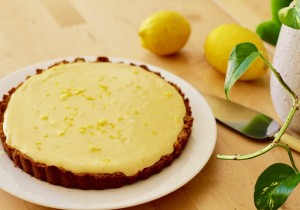
Lemon Tart

Easy (and impressive) lemon tart

So it’s been far too long since I’ve posted a lemon flavoured baked good post….or any post as a matter of fact.  With returning to self employment, as well as 9 weeks of solo parenting whilst Lachy was away on tour, life has been getting on top of me.

I’ve feel like I’m been on a never ending treadmill of work, parenting and housework….but I’ve decided to stop and reflect on what’s important to me… I’ve found that it’s easy to stop doing the things you enjoy when life gets tough, but the opposite should be true.  So now I’m making a point of keeping a focus on the bright side of life – this means more blog posts, picking up my guitar again and spending more time exercising….and of course, more lemon flavoured baked goods.

On that note – please enjoy this easy and delicious lemon tart recipe.  You can whip one of these babies up in under 20 minutes and you will not regret it (although I had to give mine away ((to the delight of my friends and neighbours)) because I was concerned I’d eat the entire thing).

Lemon Tart

Ingredients:

Base:

  • 1 and a half cups of finely crumbed biscuits (I used arnott’s granita biscuits)
  • 6 tablespoons melted butter
  • 2 tablespoons sugar (optional)

Tart Filling

  • 2 cans condensed milk
  • 3 egg yolks
  • 2/3 cup lemon juice
  • grated zest of 1 lemon (the more the merrier!!)
  • 1 pinch of salt

Method:

  • Preheat oven to 180 degrees C
  • For the Base: Spray a pie dish with non-stick olive oil spray or grease with butter. Combine crushed biscuits, butter, and sugar. Press into prepared pie plate. Bake for 8 minutes.
  • For the Pie Filling: Using a mixer, mix the condensed milk, egg yolks, lemon juice and salt together. Beat on medium speed for 4-5 minutes. Pour into pie crust and bake for 10 minutes at 180 degrees celsius. Little bubbles will start to surface. Cover the crust if it starts to brown too much towards the end.
  • Chill in the fridge for at least an hour before serving.

Lemon Tart

Serve with ice cream, cream or all of the above….and coffee… all of the coffee.

do-you-ever-feel-like-a-fraud

Do you ever feel like a fraud?

Do you ever feel like a fraud?  Like it’s just a matter of time before people realise that you’re not really as smart/capable/talented as they thought you were, and that somehow you’ve managed to fool them so far, but eventually they’ll cotton on.  Despite the many achievements you make and all the positive feedback in the world, you brush this aside and convince yourself that you’ve succeeded by pure luck, and that deep down you don’t actually know what you’re doing.

If this sounds a bit like you, you might be surprised to learn that feeling like a fraud is much more common that you think.  In fact, psychologists have researched this phenomenon since the late 1970s and call it the Imposter Syndrome.  The term was coined by psychologists Pauline Clance and Suzanne Imes.  In their 1978 article – the psychologists state:

“Despite outstanding academic and professional accomplishments, women who experience the impostor phenomenon persist in believing that they are really not bright and have fooled anyone who thinks otherwise. Numerous achievements, which one might expect to provide ample objective evidence of superior intellectual functioning, do not appear to affect the impostor belief.”

You might feel like you’re the only person you know who feels this way, but a feature of imposter syndrome is a feeling of being alone in your thinking….when actually, imposter syndrome is very common and many people think they’re the only one who could feel this way.

Clance and Imes (1978) outlined that imposter syndrome may be more common in high achieving women and may be to do with having an external attributional style, which means attributing successes to luck or external factors, rather than attributing success to hard work or effort.

When you’re feeling like an imposter, this can change the way you relate to the world, impacting your behaviours, feelings and physiology.  For example, if I feel like a fraud at work, I might work extra hard or take on additional projects that I don’t have time to work on, to stop others from finding out that I’m in fact incompetent!!  This can lead to feelings of exhaustion and sadness, and physical tension…. or, if I felt like I only got where I am by luck, then I might avoid challenges or opportunities for fear of failure and people realising I’m not smart enough.  This could lead to feelings of anxiety or sadness which may further impact my thoughts, behaviours and physiology.

If you’re having feelings of fraudulence, this could be holding you back from achieving your goals.   There are things you can do to help!! Here are four simple strategies you can try to increase your confidence, and to help you to change your attribution style:

  • Think of a recent project or goal you successfully completed – go back and make a list of the specific steps you put in to reach it.  For example, you came up with an idea, you used your research skills, you coordinated meeting, you worked long hours to get it done etc – write down as much evidence as you can!
  • Reflect on how you got to where you are in your career – did you complete a university degree or course?  Did you complete other accreditations or certifications?  Did you undergo training in the workplace?  Did you apply for your current role after being successful in a more junior role? Write down the key milestones you’ve completed to get where you are, and reflect on those moments.
  • Change your mindset about success – instead of thinking about the outcome of a task or project, think about measuring success in terms of the effort you put in, and what you’ve learned along the way.  If you did had a failure at work, and it has affected your confidence, reflect on what you learned or gained from that failure.
  • Remember that your thoughts are just thoughts – they’re not facts.  Try and hold your thoughts a little more lightly and remember that they are not truths – the less you buy into those thoughts, the less likely they are to bother you.

Remember that these thoughts can be common, but there are ways to help you to feel more confident.   However, if you’re finding that feeling like a fraud is holding you back from achieving your goals or causing you significant distress, be sure to speak with your doctor or psychologist, or call Lifeline (Australia only) only 13 11 14.

Self compassion

Are you kind to yourself? Self Compassion can help you to flourish!

Are you your own worst critic?  Do you set higher standards for yourself than you do for others? Cultivating some self compassion could help you to thrive, and to reduce your stress levels!

A recent study by Gunell and others (2017) showed that uni students who showed higher levels of self compassion, were better able to cope with the demands of stress, and reported higher levels of energy, optimism and engagement, compared to their less self-compassionate peers.  They also showed increased psychological needs satisfaction, and decreased negative emotion, leading to higher levels of wellbeing.

The questionnaire measured three components of self compassion:  mindfulness, self kindness and common humanity.  The participants were 189 first year university students, and were asked how frequently they agree with questions such as “when something upsets me I try to keep my emotions in balance.”

Self compassion

Photo by RNR Productions

A further study by Fredrikson and others (2008) showed that people who participated in daily loving kindness meditations showed increased levels of daily happiness when compared to a control group.
The researchers state “these shifts in positive emotions took time to appear and were not large in magnitude, but over the course of 9 weeks, they were linked to increases in a variety of personal resources, including mindful attention, self-acceptance, positive relations with others, and good physical health. Moreover, these gains in personal resources were consequential: They enabled people to become more satisfied with their lives and to experience fewer symptoms of depression.

The researchers state that “positive emotions produce success and health as much as they reflect these good outcomes.”

So is self compassion simply being easy on yourself?  Rewarding yourself more?  Developing self compassion can take time and practice.  We often have quite deeply ingrained thoughts about ourselves and the world, which take time to change.  Try the below simple techniques to increase your self compassion:

  • Try “Loving-kindness” meditations.  These meditations can help you to learn to direct compassion towards yourself and to others.  In addition, regular practice of mindfulness meditations can help you to connect with the present and let of go of judgements.  The less we judge ourselves, the simpler it is to be easy on ourselves!!  Try the Calm app, for free and easy to follow loving kindness meditations, or read more here.
  • Put things in perspective.  If you experience a setback or hardship, ask yourself the following question:  “If my friend X were in this situation, what advice would I give them?  What would I tell them?”  We’re often much tougher on ourselves than we are on others – take the time to think about what your reaction would be if someone else were in the same situation.
  • Reframe setbacks into positives – if you’ve encountered something difficult, consider what your learned from the situation?  Did you grow from the situation?  Did you use your strengths and try hard?  Try and reflect on the learnings you gained from the situation, and acknowledge the effort you put in.
  • Turn your ANTS into PETS.  Get to know your automatic negative thoughts (ANTS), and turn them into performance enhancing thoughts (PETS). What do you tell yourself when you’re judging yourself harshly?  You may find the same negative thoughts creep back again and again (“not good enough”, “I’m a failure” etc).  Remember that these thoughts are simply thoughts and not facts.  Try and think of some more useful self talk that could help you through the situation (Performance enhancing thoughts) – such as “I can keep trying and succeed” or “I can you my strengths to help achieve my goal in another way”.

Are you self compassionate?  Would you try these tips?  What do you do to cultivate self compassion?

pumpkin brie and pine nut tart

Butternut pumpkin, brie, rosemary and pinenut tart

Who loves brie cheese!?  Who loves pastry!?  If your answer is yes, then you need to bake this butternut pumpkin, brie, rosemary and pine nut tart!!  I was looking for a delicious new tart flavour for an Australia Day party, and thought “hey, why not throw all my favourite ingredients on some pastry and see what happens”, and luckily the combination was perfection!!  They were gone in minutes!!

To make things even better, they were super easy to make!

brie-3

brie-tart-4

Ingredients (makes 2 large tarts, or 12 pieces)

  •  2 sheets frozen puff pastry (thawed)
  • 1 egg (for brushing)
  • 1 butternut pumpkin, chopped and thinly sliced
  • Fresh rosemary
  • 1 small wheel of brie cheese, thinly sliced
  • Pine nuts
  • Salt and pepper

Method

  •  Pre-heat oven to 200 degrees celsius.
  • Place thinly sliced butternut pumpkin on a tray lined with non-stick baking paper – drizzle with olive oil and rosemary and bake for 10 minutes.  Remove from the oven.
  • Place each sheet of pastry on a baking tray lined with non-stick baking paper.
  • Fold over  1cm edge on each side of the puff pastry to make a border around the edge of each sheet of pastry.  Press the edges down with a fork.
  • Gently prick the pastry all over with a fork
  • Lightly brush the edges of the pastry with egg.
  • Fill the pastry with pastry weights, and bake for 10 minutes.
  • Remove the pastry from the oven, and remove the pastry weights.
  • Top each tart with the pumpkin, brie, pine nuts additional rosemary.  Sprinkle with sea salt flakes and pepper.
  • Bake each tart for a further 10 minutes.
  • Allow to cool, and slice each tart into 6 pieces.

brie-tart-1

Enjoy!!   Happy Australia Day!!