
Corona Virus Anxiety

How to Cope with Corona Virus Anxiety

Many of us are experiencing stress and anxiety about the Corona Virus Pandemic.  Firstly, it’s important to remember that anxiety is a normal response during a stressful situation. Acknowledging these feelings is important, rather than trying to push them away or struggle with them.  A normal amount of anxiety motivates us to do the important stuff, like engage in correct hand washing techniques and adhere to social distancing. However, if you’re finding that your anxiety is stopping you from doing your usual activities or interfering with things that are important to you, then it might be time to seek some help.


Here are 5 simple tips you can try to help you reduce your anxiety during this stressful time.

Calm Your Anxiety Response

Our body’s fight or flight response has evolved to protect us from danger, by preparing us for fight or flight in response to a threat.  What can happen when we’re worrying is that our fight or flight response becomes activated, even though there is no actual danger there.  Even though we’re worrying about things that haven’t necessarily happened yet, our body responds in the same way it would if we were fleeing from danger.  Learning to calm the body’s fight or flight mechanism when it’s not needed is really important.

Slowing your breathing down activates our parasympathetic nervous system, which is our body’s own natural calming mechanism.  A simple technique you can try is breathing in for 4 seconds, holding for 2 seconds, then exhaling for 6.  For a simple video version of this technique, click here.


Make time for Positive Emotion

Often when we’re under stress, we stop doing the things we enjoy.  When we’re caught up in negative emotion, our thinking becomes much more narrow and negative.  Our mood is also affected – when we’re not doing the things we enjoy, we can start to feel low.  Positive emotions are beneficial for our wellbeing and can help us bounce back from the body’s stress response.  Also, according to the Broaden and Build Theory, positive emotions change the way we think, and can help us think more creatively and expansively.  Even if you don’t feel like it, making time for positive activities that you enjoy is likely to help boost your mood, and help you to bounce back quicker from stress!
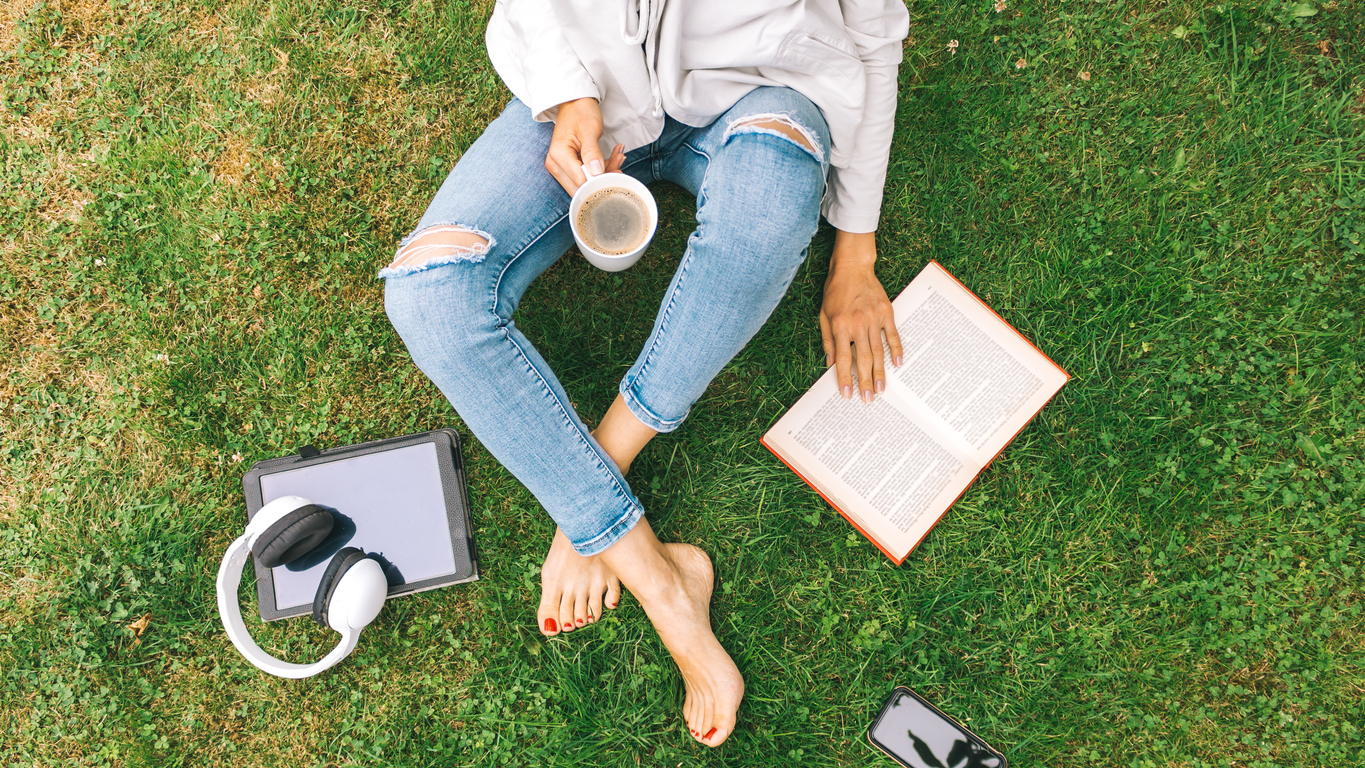
Positive activities

Look after your Physical Health

Keeping our physical health in good shape is an important buffer against the effects of stress.  Making sure we’re getting adequate sleep and exercise, as well as eating a healthy diet is essential.  Getting 7-8 hours of sleep per night will help improve your mood, and give you the energy to engage in exercise and other healthy behaviours.

Making sure that you’re moving every day is important.  30 minutes of exercise per day is great for our mental and physical health.  Make sure you pick something you enjoy – whether it’s walking, dancing or lifting weights, picking something you love will help you to stay consistent.  Exercise helps reduce our stress levels by reducing our cortisol levels, which is one of our bodies’ primary stress hormones.

Making sure that you are eating regularly, and having a balanced diet is also important.  Skipping meals can contribute to feelings of anxiety, so make sure you’re planning ahead so you stick to 3 healthy meals, plus snacks.

Physical activity

Focus on Acts of Kindness

When we perform acts of kindness, this can lead to increases in our feelings of wellbeing, as well as increase our social bonds.  When you’re feeling stressed, focusing on how we can help others can be a great way to gain a sense of control and to improve your mood.  It might be small gestures, such as calling an elderly relative, or picking up some extra groceries for a neighbour.  For more information about kindness and wellbeing, click here.


Focus on the Things within your Control

It can feel really overwhelming when we don’t have a lot of information or the ability to change the situation.  Stay focused on the things that are in your control.  That might be gathering accurate information from credible sources such as major newspapers or government websites, and adhering to social distancing requirements.  If you’re finding the news cycle overwhelming, choosing to tune in just once per day can be a good strategy to reduce your anxiety around the constant bombardment of Corona news.

Focus on the other things within your control such as things that help you to relax or to feel good.


Let go of Unhelpful Thinking

We often have thoughts or worries which are unhelpful or make us feel worse.  Simply noticing that a thought is unhelpful is a great way to gain a bit more distance from your thinking.

Practicing mindfulness is also a great strategy to become better at letting go of your thoughts, without judging them.  Try a Mindfulness App such as Smiling Mind, Calm and Headspace, if you’re interested in adding mindfulness practice into your daily routine.


Please click here for the YouTube Version of this post.


I hope these techniques help.  If you’re struggling with anxiety, see you GP for a mental health care plan, or contact lifeline on 13 11 14 for free telephone counselling.
how do you let go jemma doley

3 Must Read Tips to Beat Anxiety

Throughout my life, anxiety has often got the better of me….capturing my attention and hooking it in with thoughts and worries about the past or the future….things I couldn’t control.  At times worries have prevented me from doing things I enjoyed and held me back from challenges.

When anxiety comes, it’s like a weight on your shoulders….instead of engaging in life and enjoying the moment, thoughts simply weigh you down.  However, it’s important to know that anxiety can be treated and managed.

Here are three of my favourite tips for reducing worry.  Try these simple tips and see how they work for you.  I suggest practicing them when you’re feeling good, so that you can learn them and then apply them during times of increased stress.

  1.  Slow your breath.  Breathe in for 3 seconds, then out for 3 seconds.  Repeat 10 times, and notice how you feel.  Slowing your breath is key for controlling anxiety symptoms – slowing the breath will signals to your body to relax, and will help you to start to breathe more deeply (diaphragmatic breathing).  You can do this technique anywhere!!
  2. Try worry time. Spend 5 minutes each morning actively worrying (yes, that’s right!).  By giving your worries the time of day they’re looking for, often they don’t distract us so much throughout the day.  If you start to worry later in the day, put that thought aside for worry time tomorrow!!  For full instructions on this techniques, see this detailed post on Worry Time
  3. Practice mindfulness.  Regular mindfulness practice can help us to unhook from our thoughts when they’re distracting us.  Rather than trying to challenge our thoughts, mindfulness can help you to let go of your thoughts and maintain a focus on the present.  Mindfulness is also relaxing and can be a fantastic way to unwind after a stressful day.  Download a free app, such as Smiling Mind, and try practicing mindfulness for 10 minutes each day for a week, and notice how you feel!  For more details on mindfulness, see this post.

Taking time out for self care is essential for managing anxiety.  Would you try these tips?  What else works for you when you’re feeling worried?

If you find that worry is interfering with day to day life, call Lifeline (Australia only) on 13 11 14 for free telephone counselling on a 24/7 basis, and see your GP for further help.

Reduce your Worry

Worried? Try this simple technique to reduce your worries

Do you find yourself caught up in your worries?  When my stress levels increase, I find that it’s easy to become distracted from the present and find myself caught up thinking about things outside of my control.

Whilst it’s normal for everyone to have worries, if you’re finding anxiety is getting the better of you, or you can’t seem to stop thinking about everything that’s going wrong, it might be time to schedule in some worry time!!  “What!?  Why you you want to worry even more!?” you ask.

Worry time is one of my favourite CBT techniques to help reduce ruminative worries.  It’s worked well when I’ve taught it to clients, and I also found that it worked really well for me personally (particularly when going through stressful events or major life changes).

The reason worry time seems to work so well, is that by giving your worries the time of day they’re asking for, they become less scary, less over whelming and less daunting.. and they stop capturing your attention throughout the day, because you’ve made room for them.

So here’s how you do it!

  1.  Schedule in a time each day that you will devote purely to worrying!!  Yes, you heard me!!  It might seem crazy and paradoxical, but the point is that by allowing your worries some time of day, you may find that they aren’t so distressing any more….or that you even start to tire of thinking about them!! You might allocate 5 to 10 minutes per day – I strongly suggest doing this in the morning, not at night or before bed. During your worry time, set a timer or alarm to signal the end of your worry time.
  2. During your worry time,  think about all the worries that have been causing you stress.  Give them time of day – if you run out of worries, repeat the ones you’ve already covered!  You can say them silently in your mind, or you may find it easier to say them out aloud.
  3. The first few days you try worry time, you may find this quite upsetting, but the more you practice, the easier it will become, and the less distressing the thoughts will feel.  If you feel worked up after worry time, try taking some deep breaths, or having a hot shower to help you refocus.
  4. The more you do this technique, you may even find that you find it difficult to fill your 5 – 10 minutes time slot, which means it’s beginning to work – you;re giving your thoughts the time of day they’ve been asking for, and they’re becoming not so scary and overwhelming anymore!!
  5. Over the course of the day, if you find your worries popping into your mind, tell yourself that you will address these during your next worry time – you can even write yourself a reminder note if this helps. You may find that over the course of the day, you’re not as distracted by your worries, and better able to switch off from them.  This will in turn help you to feel more in control of your thoughts and feelings.

If you like using apps, you can also download the Reach Out WorryTime App, which can help you structure your Worry Time and allow you to enter your worries as they pop up.

Would you try this technique?  If you’re finding your worries are stopping you from doing the things you care about, or if you are feeling distressed, speak to your GP, or contact Lifeline, on 13 11 14.

Sedentary behaviours linked to anxiety

An everyday habit that could be increasing your anxiety

There is so much evidence out there which shows that sedentary activities have a poor impact on our physical health….but what about our mental health?  A new study by Taychenne et. al (2015) has found that there is a link between anxiety, and sitting down all day.

Activities such at watching TV, working at a computer or playing video games may have a link to anxiety. Results showed that the more sedentary the behaviour, the great anxiety experienced.

We don’t know why sedentary behaviours lead to anxiety, but possible reasons may include central nervous system arousal and disturbed sleep, social withdrawal from long term engagement in behaviours such as video games, or lack of physical exercise which can displace anxiety.

Whilst more evidence is needed in this area, there is a multitude of evidence out there that supports the relationship between physical activity and positive mental health.

Are you going through stress or worry?  Whilst it might seem tempting to curl up on the couch and watch TV, or stay in bed with your laptop all day, this may make your anxiety worse!  Physical activity is a great stress buster, and a simple walk every day is an excellent way to keep physically and mentally healthy!

Can you think of some different ways to de-stress and relax, whilst avoiding the temptation of the couch?


How to Beat Performance Anxiety

Brooks (2013) conducted a series of studies looking at performance anxiety across different settings including giving a speech, singing karaoke and completing a maths test.
The studies found that individuals who “reappraised” their anxiety into thoughts of excitement, performed better than people who told themselves to remain calm.
Trying to deal with pre-performance anxiety?  Try re-framing your feelings of anxiety into thoughts of excitement!  Try some positive self talk with simple phrases like “lets get excited!” or “I can’t wait to do this!!”  This is more effective than attempting to calm down.
Also – remember, we have an optimum level of anxiety that helps us to perform better! A little bit of nerves may actually help you!!  (Just don’t tell yourself to calm down!!)
What techniques do you use to beat pre-performance anxiety?  Would you try this technique?mindy1