jemma doley

Gratitude: Increase your wellbeing by practicing gratitude

Do you practice gratitude?  Do you take the time to stop and think about all the things you are thankful for each day?  Whilst I continually express gratitude to my skim cappuccino in the morning, I rarely find the time to truly reflect on the things I’m grateful for.  In my experience, it’s easy to feel like you always need more and to compare yourself with others. Despite all the wonderful things that happen each day, feelings of wanting more can override my ability to think about all the positive things in my life – from the amazing family and relationships I have, to having the freedom to pursue my goals, or simply the beauty and wonder of being in nature.

Practising gratitude is a great way to put things into perspective, but in addition, having a grateful outlook on the world could greatly increase your wellbeing, through a multitude of factors!

jem 3 faded

In addition to leading to increases in positive emotions, Emmons & McCullough (2003)  state that “gratitude is effective in increasing well-being as it builds psychological, social, and spiritual resources.”

  •  Being grateful can lead you to reciprocate acts of kindness towards others (performing acts of kindness also boost happiness!).
  • Gratitude can strengthen the social bonds you have – for example, by reflecting on the positive actions of a friend or family member, this may help you to feel more cared for and help you to be mindful of the supportive relationships in your life.
  • Gratitude has strong links with spirituality and may help strengthen spirituality
  • As a positive emotion, according to Broaden and Build Theory, the practice of gratitude can lead to increased creativity and flexibility.

Gratitude has also been recently linked to increases in self control!.

Berida Manor

jem 4 faded

How could you integrate the practice of gratitude into your day?  Would you keep a gratitude diary or log each day? How could you integrate discussions around gratitude into dinner table discussions, or in the workplace? Do you express gratitude to the people you care about this?  What are some creative ways you could do this?

I would love to hear some suggestions!

Gratitude

Gratitude could improve your self control

Is self control an area you need to improve?  I know that I’ve often regretted a late night online shopping session (the sale was just so good, they were practically giving it away!!), or felt remorse over too many chocolate croissants purchased on the run!  I’m not known for my budgeting skills, and often have been known to make an impulse purchase… but what if there was another strategy that could help improve my self control (without feeling like hard work!!).  Gratitude could be a possible answer!!

The benefits of expressing gratitude are now well documented.  Studies have shown that by practising gratitude, you can experiences increases in happiness and wellbeing!

But….gratitude can do more than just lead to increases in happiness…it could help you to become more patient and less impulsive!!  A new study by Dickens and DeSteno (2016) showed that people who expressed gratitude, were more patient and less impulsive.  The more grateful participants in the study were able to be patient, and bypass a short term reward ($30 now), for a better reward in the future ($50 later).

“Wow….sounds great…. but how do I become more grateful?”you ask.  Some simple techniques you can try include:

  •  Three things – each night, think of three things you are grateful for that happened during the day.  This could be a great activity to do around the dinner table with friends or family.
  • A gratitude diary – keep a log of all the wonderful things you are grateful for – it could be a small thing, like the amazing coffee you had in the morning, or something bigger, like gratitude towards a friend.
  • Write a gratitude letter to someone who has impacted your life – it might be a teacher, or mentor, or someone who helped you through a tough situation – you don’t have to send it, but if you did, you might find this equally rewarding (for anyone who read my post about acts of kindness, these are also linked to increase happiness and wellbeing!!).

70s jem 1

Top – Ministry of Style

Would you try these?  Not only could you experience increased wellbeing, but you may also find your self control and patience improve too!!  Woohoo!! 🙂

Chocolate Bundt Cake

Chocolate Espresso Funfetti Bundt Cake

Nothing spells fun like sprinkles!!  Today I purchased a Bundt cake pan….which is basically a regular cake pan, with some cool shapes in it, and a hole in the middle!!!  Best $20 I ever spent… this cake is the bomb!! It’s Lachy’s birthday, so chocolate cake was called for!!  This cake was so good that I’m currently trying to find people to visit and eat it, so that we don’t eat the whole thing!!

Bundt 2

I used this recipe from Joy the Baker – but made a couple of small tweaks…I made a simpler ganache (because I was too lazy to add additional ingredients), and brushed the cake with a wash of orange juice and castor sugar before icing, for added moisture!!

Ingredients

  • 1 1/4 cups plus 1 Tablespoon brewed coffee
  • 3/4 cup Dutch cocoa powder
  • 2 1/4 cups sugar
  • 1 1/4 teaspoons salt
  • 2 1/2 teaspoons baking soda
  • 2 whole eggs
  • 1 egg yolk
  • 1 1/4 cups plus 1 Tablespoon buttermilk
  • 1 cup plus 2 Tablespoon canola oil
  • 1 1/2 teaspoons vanilla extract
  • 2 1/2 cups, plus 2 Tablespoons all-purpose flour, sifted

For the Ganache:

  •  1 pack dark chocolate melts
  • 1/2 cup of thickened cream

Method:

  •  Preheat oven to 180 degrees celcius
  • Grease a 10 inch Bundt Cake Pan
  • To make the cake batter:  Put brewed coffee and cocoa powder in a small saucepan and bring to a boil, whisking frequently.  Remove from the heat and let come to room temperature.
  • In the bowl of a stand mixer fit with a whisk attachment, mix together sugar, salt, baking soda, eggs and egg yolk on low speed for about 1 minute.
  • Add the buttermilk, oil and vanilla extract and mix on low again for another minute.
  • Add the flour and mix on medium speed for 2 minutes.
  • Add the cooled cocoa mixture and mix on medium speed for 3 minutes.
  • The batter will be very loose (it’s super liquidy, but don’t worry, it will work!!).  Pour into the prepared cake pan and bake for 1 hour, or until a cake tester inserted in the cake comes out clean.
  • Let the cake cool completely in the pan and then invert onto a cooling rack.
  • Make the ganache, by placing your chocolate and cream into a heat proof bowl.  Place the heat proof bowl above a simmering saucepan of water, making sure your bowl does not touch the water!!  Stir regularly, until mixture is runny and glossy.  Ice cake quickly before your ganache goes hard!!

Add sprinkles!!

Dash loves cake

bundt slice

lachy loves cake

This made a great birthday cake for Lachy…and was enjoyed by all…especially Dash, who has now learned how to ask for “more cake!”

The texture of this cake is amazing…this is my new favourite chocolate cake…and the coffee flavour makes it even better. Have you made a bundt cake before?  I can’t wait to make some other delicious bundt cake flavours!!

Mindfulness: Mindful Colouring – Science or Snake Oil?

Do you practice mindfulness?  Are you on the adult colouring bandwagon?  Mindfulness colouring books and magazines are everywhere…. but is there evidence to support the benefits of “mindful colouring”?  Personally, I like the idea of kicking back with a cup of tea and a colouring book, but the question I ask is.. is “mindful” colouring any different from regular colouring?   Could I potentially colour in the Sydney Morning Herald and gain the same benefit?   Could I pick up a $2 children’s colouring book instead of one of the $20 “mindful” colouring books?

My second question is….does “mindful” colouring help you to achieve a state of mindfulness?  Or does it perhaps just help you to relax and unwind, because you’re taking some time out to do something creative and engaging in an activity that’s nostalgic.  Or….could it help you to achieve a different psychological state, such as flow?  When you’re experiencing flow, you’re so involved in a task, it feels like time stops, and you may also be experiencing feelings of joy….this is different to mindfulness, where you’re simply noticing things, rather than judging or appraising an activity as fun, joyful, good, bad etc.

There isn’t a lot of empirical evidence supporting mindful colouring that I could find. A study by Carsley, Heath & Fajnerova (2015) looked at the effects of “mindful colouring” (using mandalas, similar to the patterns pictured below), vs regular unstructured colouring, on reducing test anxiety for children.  Results showed that both the unstructured colouring, and the mandala colouring (the “mindful” colouring) reduced anxiety….but for boys, the unstructured colouring had greater effects in anxiety reduction!  So based on this study….colouring in (regardless of what you colour), may help with anxiety reduction….but….keep in mind that this particular study was done on children.

All in all, I think that engaging in an activity that you find enjoyable or relaxing is a positive thing, and if adult colouring works for you, then go for it!!  Adult colouring can definitely be a great way to practice mindfulness with a few simple instructions.

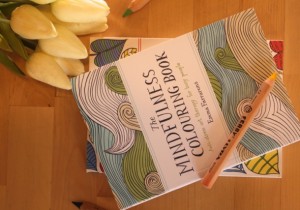
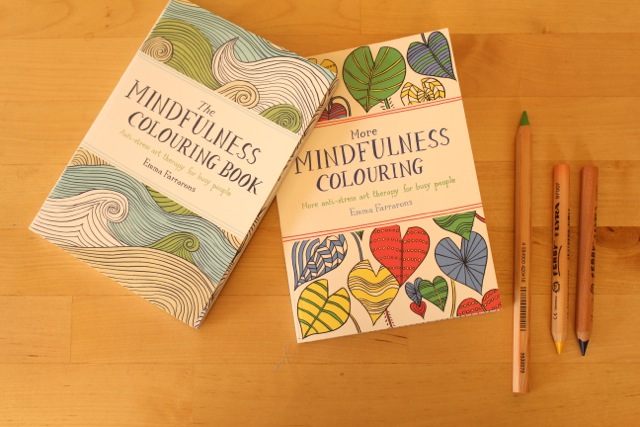
colour 2These books sure look delightful….but at $20 a pop, are they worth it?

Next time you pick up your colouring book (the $20 mindfulness colouring book, or the $2 Winnie the Pooh colouring book), try having a read through the below instructions, and try and apply them to your colouring session, to make your colouring time a mindfulness activity.

  • Bring your awareness to the page in front of you – start to notice the images and patterns on the page.
  • Pick up your first pencil or crayon.  Notice the feeling of the pencil/crayon in your hand – is it rough, or smooth?  Notice the feeling of the paper beneath your other hand.
  • Start your colouring – keep your awareness on the feeling of the pencil in your hand,  Notice the feel of the pencil as you begin to colour – notice how it feels when you lightly colour the images in front of you.  If thoughts come into your mind, gently unhook from them, bringing your awareness back to the task at hand.
  • Start to notice the colour appearing on the page.  Notice the subtle differences in colour when you apply different amounts of pressure to the pencil.
  • You may find your mind wandering – you may be thinking about the other things you have to do today.  If you notice your mind has wandering, gently bring your awareness back to the colouring task.  How is your page looking?  Can you notice the different colours, or the subtle changes in direction of your pencil strokes?
  • Notice the sounds the pencil makes as it touches the paper.
  • Choose an area to focus your awareness  on – it may be focusing on the images on the page and noticing the colours appearing as you work.  It may be focusing on the feel of the pencil as you colour, or the sound of the pencil and paper.  Try and keep your awareness on one of these areas.
  • Time and time again, your mind will wander.  This is perfectly normal.  Each time you notice your mind wandering, simple notice you’ve been distracted, and come back to the colouring.
  • Use the task as an anchor, helping you to keep from drifting off with your thoughts….noticing each time you’re distracted and coming back to the task at hand.

Would you give this a whirl as a strategy to practice mindfulness?  Or do you prefer to be mindful in other ways?  My overall stance is, if you enjoy it, go for it, but use it in conjunction with other wellbeing strategies!!  You might find that going for a walk is more relaxing and present focused than adult colouring!

If anyone has any empirical studies about the efficacy of “mindful colouring” that I haven’t mentioned, please share them with me!

Mindfulness

Can mindfulness help enhance your performance?

Do you experience difficulty in high pressure situations, like giving a presentation, performing in public, or competing in sports?  Mindfulness could be a key strategy in helping you to remain focused and give your best performance.

There are many factors that occur psychologically before any performance, which may negatively impact our performance; these include our self talk or inner dialogue (“I know I’ll stuff up this presentation, they probably know I don’t know what Im taking about!”), our expectations about success or failure (“I’ll probably be so embarrassed I’ll have to find a new job!” *facepalm*), a focus on our own physical sensations (such as noticing yourself feeling shaky or jittery – “why oh why did I drink three coffees and skip lunch!?”), self doubts, and even efforts to try and “block out” negative thoughts.

However, it may be that the more time we focus on trying to control these uncomfortable thoughts, feelings and behaviours, that performance can actually be impaired… this could be because that by focusing on controlling our mental processes, it distracts us from the task at hand, and brings our attention from the present moment and external environment, back into our inner selves.  “Experiential avoidance” is a term that means using strategies to try and control or block out unpleasant thoughts, feelings or sensations.  For example, someone who is feeling excessively anxious before giving a work presentation, may call in sick to work that day, thus preventing the discomfort of the feelings of anxiety (at least in the short term).  Other experiential avoidance techniques might include attempts to try and control our thoughts through distraction or trying to suppress our thoughts….but by being kept busy trying to control our negative thoughts, this doesn’t leave much time to focus on the actual performance task at hand, and the environmental demands!!

Gardner & Moore (2007) outline an “Acceptance-based approach” to performance, which outlines that when performers are able to accept that their negative thoughts, feelings or internal experiences are normal, and refocus their attention to the performance task at hand, this will enhance performance by keeping them focuses on the key aspects of the environment needed for excellent performance.  In contrast, performers who engage in experiential avoidance are likely to have impaired performance outcomes.

“Performance outcomes depend on the degree to which the performer accepts his or her own experiences as normal or naturally occurring; is willing to persist on the task despite these experiences and maintains his attentional focus on the environment at hand rather than his or her internal thoughts, feelings an physical sensations.” (Gardner & Moore, 2007, pp. 166)

So how can you just “accept” your negative thoughts, crushing feelings of anxiety etc, and focus on a performance, when you feel terrified!?  A key strategy to help you to learn to “unhook” from negative thoughts, and to learn to focus on the present is mindfulness.

Mindfulness can be defined as “Paying attention on purpose, without judgment to our experience as it unfolds moment by moment” (Kabat-Zin, 1990).  Whilst this all might sound great, mindfulness takes practice!!  Fear not though, there are some easy ways you can integrate mindfulness into your daily routine…through regular practice of mindfulness you begin to unhook from thoughts, and focus more on the present.

Click here for my introduction to mindfulness post with two simple exercises you can try.  I’ve also just downloaded the Smiling Mind app for some simple mindfulness exercises I can download on my phone and do every day.

Are you a performer, athlete or someone who gives regular presentations?  Have you tried using mindfulness as part of your pre-performance routine?   How could you integrate mindfulness into your practice and preparation before a big event?

nutella swirled banana bread

Nutella Swirled Banana Bread

Nutella banana bread

So I had a fruit bowl full of bananas….and a jar of Nutella staring me in the face… what better to do, then combine them into the ultimate NUTELLA SWIRLED BANANA BREAD (I feel like this banana bread deserves capital letters).

I recently made the best ever brown butter chocolate chip cookies stuffed with Nutella, and am seriously on board the Nutella baking bandwagon… a few google searches would reveal that I’m not the first one to dream up such an amazing banana bread!!

I used this recipe from Zoe Bakes.  It was so darn good, half the loaf was gone in minutes!!   The recipe makes two loaves, but you can halve the recipe if you don’t trust yourself to have two of these in the house.

nutella banana bread

Ingredients:

Makes 2 loaves

  • 3 large or 4 medium (2 cups mashed) bananas, yellow with brown speckles
  • 1 cup brown sugar, packed
  • 250 grams unsalted butter, melted
  • 1/2 cup milk
  • 2 large eggs
  • 2 teaspoons vanilla extract
  • 3 cups self raising flour
  • 1 1/2 teaspoons salt
  • 1/2 cup Nutella

Method:

  •  Pre-heat over to 180 degrees Celsius
  • Grease two loaf tins and line with baking paper
  • Mash the bananas with a potato masher, so they still have some small lumps, set aside.
  • Combine the sugar, butter, milk, eggs and vanilla and mix with a hand mixer or in a stand mixer. Whisk together the flour and salt. Add the dry ingredients to the sugar/butter mixture, just until smooth. Add the bananas and mix just until they are combined.
  • THEN COMES THE MAGIC – microwave your nutella for about 20 seconds until soft (or you can stand the jar in hot water).
  • Drizzle about two thirds of the Nutella over the mix, and gently fold it through, being careful not to stir too much, as you want to retain a marbled effect.
  • Pour the mixture into your loaf tins
  • Drizzle the remaining Nutella over the top of the banana bread.
  • Bake for 45 minutes, or until a skewer comes out clean

nutella banana bread

Pure deliciousness!!! Serve with…more Nutella!!!

Do you have any Nutella recipes you would like to share?  Are you on the Nutella Bandwagon?

acheive balance

On (not yet) Acheiving Balance

beach 4

Every year I get older I seem to realise that life throws more and more responsibilities at me, and frankly, I find it quite overwhelming at times!!

I’m lucky enough to have a fantastic job, where I can help people and work as part of a great team…but nonetheless, balancing a career, with studying a masters degree, raising a one year old son, maintaining relationships, blogging, attempting to look after my health, fitness and wellbeing and having some semblance of social life all comes at a price.  That price means that I often feel that I have so many competing demands that I just don’t know where to start!!  This can be exhausting, because instead of just enjoying what I’m doing, my mind is constantly ticking away about all the numerous other things I have to do.

beach 1

No matter who you are and what you do, you’re probably balancing multiple roles and multiple demands.  Here are a few strategies you can try to help you to feel more balanced.

  1.  Acceptance.  Sometimes simply accepting that we can’t do it all is a good start.  Even though I know that no one has a perfect life, everywhere in the media we are bombarded with images of people who have all their shit together – perfect house, great social life, great job etc etc… but no one can do everything at once, and sometimes certain priorities have to take preference over others.  Sometimes when I’m feeling overwhelmed, I try and think about my core values…what’s most important to me?  Having a day to just hang out with my husband and son means so much to me and makes me feel happy….  yes, there is plenty of house work I could be doing, and I’m sure I could spend more time studying, but is that something I’ll look back on and be thankful for?
  2. Learn to engage in the present.  It’s really hard to focus on the task at hand when you’re sending an email, whilst watching some TV and keeping an eye on dinner on the stove (oh, and having a half-assed conversation with a loved one while you’re at it!).  Try and practice mindfully savouring the task at hand, rather than cruising through it on autopilot..  for more information on Mindfulness, click here!  Set yourself small goals, like enjoying dinner without looking at your phone or laptop.
  3. Notice when you experience flow….and do more of that!!  Flow happens when we become so engaged in what we’re doing, that we lose a sense of time, and become so caught up that we don’t even think about all the things we should be doing.  Flow leads to greater wellbeing and reduced stress… they key is allowing yourself the time to do those activities that help you experience flow… For me, I experience flow when playing the guitar, yoga or cycling, or even writing or reading a good book…. the biggest battle for me is making the time for those activities!
  4. Outsource!  In your quest for the perfectly balanced life, could it be that by wanting everything to be perfect, you might in fact be holding on to some unnecessary activities that you could actually hold less lightly, or even outsource?  For example, is there a work task you could delegate so you can leave on time today?  Could you get a cleaner once a fortnight, or some help with a task that’s painstaking for you, like yardwork, doing your taxes, or a myriad of other painful life admin tasks?
  5. Set boundaries and say NO more.  At the end of the day, there are only 24 hours in that day!!  Is right now the best time to commit to that volunteer project you’ve been thinking about, or to fill your weekend schedule when you know you may have trouble meeting all those commitments?  Be easy on yourself, and allow yourself time to meet your existing commitments before taking on too many more.
  6. Look after yourself!!  When life gets crazy, self care is more important than ever….taking time out for exercise works wonders for our mental and physical health…you might feel too overwhelmed for a break, but after a 1 hour gym class or even a 20 minute walk, you’re sure to feel more energised and ready to take on even more challenges… remember, that positive emotions broaden our thought-action repertoire, and may help you to solve problems more effectively and be more creative!!  Schedule time for your wellbeing.  Just like you schedule work activities and appointments, it’s important to schedule time out for important things like exercise, social and family activities and even some downtime!

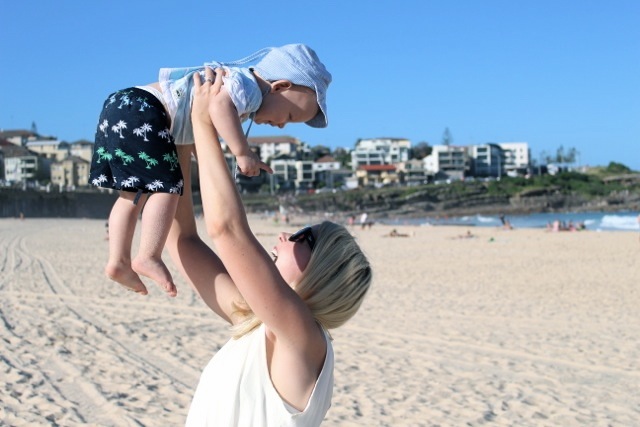
beach 3Most importantly, just remember that at the end of the day, no one can do it all.  Be good to yourself and accept that there is only so much you can take on, and that sometimes things will come up that are completely out of your control.

What strategies do you utilise to stay balanced?  Would you try these?

Dress - Anine Bing
Sunglasses - Quay Eyewear
drink more coffee

Another reason to drink more coffee

If you’re a coffee lover like me, you probably don’t need more excuses to drink coffee, but now and again I like to reflect on all the positive reasons I should continue my three cup a day habit….especially when I’m about to pay $3.50 for another cappuccino on a tough day!!

In a study by Borota, Murray, Keceli, Chang, Watabe, Ly, Toscano and Yassa (2014), the effects of Caffeine on long term memory were examined.

Participants were given a series of pictures to view and learn.  After the task, they were then either given a caffeine tablet (containing 200mg of caffeine) or a placebo tablet.
The next day, the participants were administered the task again, with some images being the same and some different.
The “Caffeinated” participants were better able identify the similar images than the non-caffeinated group.

The researchers concluded that the group given the caffeine following the tasks were aided in the “consolidation” of long term memories rather than short term recall.

What are the implications of this?  Learning something new?  More reason to have a cup of coffee after each chapter read/study session/discussion/task practised etc, to help you to better consolidate those memories for long term learning!!


Macadamia and White Chocolate Cookies

White Chocolate and Macadamia Nut Cookies

If you haven’t already noticed, I’ve been on a cookie bender the past few weeks….Sydney weather has been horrible, so what better to do at home than to bake cookies!!  I’ve never been a massive white chocolate fan, but these cookies are seriously amazing…the white chocolate and macadamia combination, along with the saltiness of these cookies is just divine!!   So divine, that I’m about to deliver a batch of these cookies to my neighbours before I eat them all!!

Cookie Flatlay Edit

I used this recipe from Donna Hay, but made a couple of tiny tweaks including the addition of greek yoghurt, and chilling the dough for an hour before baking.

Ingredients

  • 150g unsalted butter, softened
  • 1 cup (175g) brown sugar
  • ¾ cup (165g) white sugar
  • 2 teaspoons vanilla extract
  • 1 egg
  • 1 tablespoon greek yoghut
  • 1½ cups (225g) plain (all-purpose) flour, sifted
  • ½ teaspoon baking powder, sifted
  • ½ teaspoon table salt
  • 250g white chocolate, chopped
  • 150g macadamia nuts, chopped

Method

  • Place butter, brown and white sugars and vanilla in an electric mixer and beat for 8–10 minutes or until pale and creamy. Scrape down the sides of the bowl and add the egg, beating well to combine.   Add yoghurt and beat through.
  • Add the flour, baking powder and salt and beat on low until a dough forms. Fold through the chocolate and nuts.
  • Chill dough for one hour.  Preheat oven to 160°C (325°F).
  • Roll 2 tablespoons of the dough into balls at a time and flatten slightly. Place on lightly greased baking trays lined with non-stick baking paper, allowing room to spread. Bake for 15–18 minutes or until golden. Allow to cool on trays before serving.


Cookie edit 2

And that’s it….pure deliciousness!!  They also remind me of the cookies you get at Subway!!  Is anyone else a closet Subway cookie lover!?

reduce stress

Try THIS simple tip to reduce your daily stress levels

How do you unwind after a stressful day?  Do you exercise, have a glass of wine, or a chat with a friend?  After a rough day, did you ever consider that helping others through prosocial behaviour could help reduce your own stress?

A recent study by Raposa, Laws and Ansell (2015) showed that prosocial behaviour can reduce the effects of day to day stress on our emotional functioning.  The study showed that those who engaged in more prosocial behaviours on a stressful day, could mitigate the effects of the day’s stress.

The prosocial behaviours included small gestures such as opening a door for others, or asking if others need help .

So it’s win win!!  Do something kind for others, and you can also help yourself to cope better with stress!! Would you try this?  What else could you do?  Flowers for a friend? Make a cup of tea for your partner?

For more information on kindness and wellbeing, check out this post from last year.