Chocolate Tart

Easy Chocolate Tarts

easy chocolate tart

I love chocolate tarts…almost (but not quite) as much as lemon tarts.  Out of sheer caution, I made only two of these tarts (and as I predicted, I ate both of them…instead of dinner….with wine of course….all the food groups!!)

These are a super easy dessert to make and sure do taste amazing!! The best thing is, you only need a few ingredients to make them!!

I used frozen puff pastry, but you could also make these with a biscuit base if you want a no-bake option.
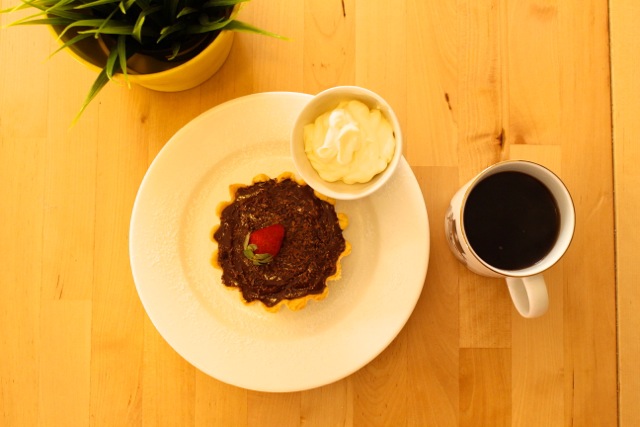
easy chocolate tart

Ingredients:

  • Frozen puff pastry
  • 200 mls thickened cream
  • 200 grams dark chocolate melts
  • 1 table spoon espresso coffee (disolved)
  • 2 tablespoons of icing sugar

Method:

  • Pre-heat oven to 180 degrees celcius
  •  Grease four mini tart pans
  • Press puff pastry into tart pans and trim edges
  • Use pastry beads to weight puff pastry to prevent it rising – bake pastry for 15 minutes, then remove from oven,
  • Remove pastry weights, and bake for an additional 10 minutes or until golden
  • Allow tart shells to cool
  • Melt the milk and dark chocolate together in a heatproof bowl over a saucepan of simmering water (don’t let the bowl touch the water). Remove from heat, stir until smooth, then allow to cool for 5 minutes. Stir in the coffee and fold in the icing sugar
  • Whip cream until soft peaks form, then fold into the chocolate mixture. Pour into the tart pans and chill for at least 2 hours until the chocolate filling is set (as you can tell from my photos, I was so eager to photograph, then subsequently eat my chocolate tarts, that I didn’t wait the full 2 hours for them to set).

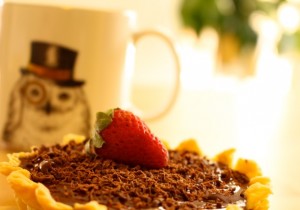
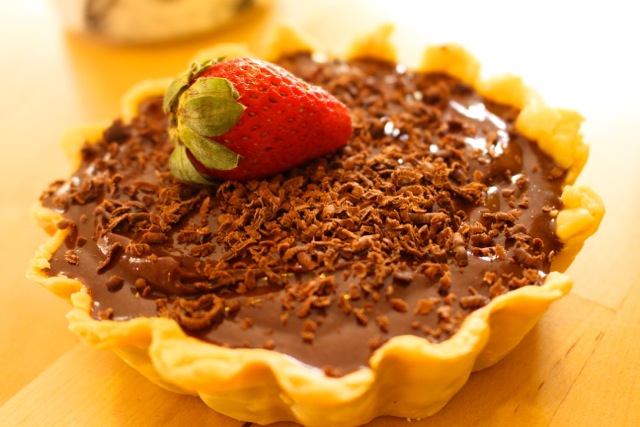
Serve with all the trimmings – shaved chocolate, cream and strawberries!  I suggest a 50:50 cream to tart ratio!!

Brown butter chocolate chip cookies with nutella and sea salt

Nutella Stuffed Brown Butter Chocolate Chip Cookies with Sea Salt

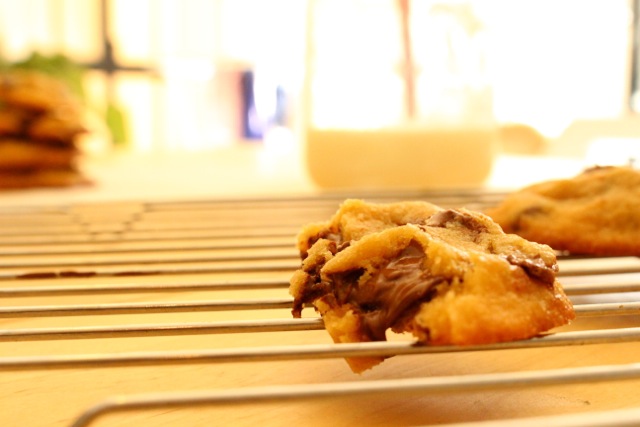
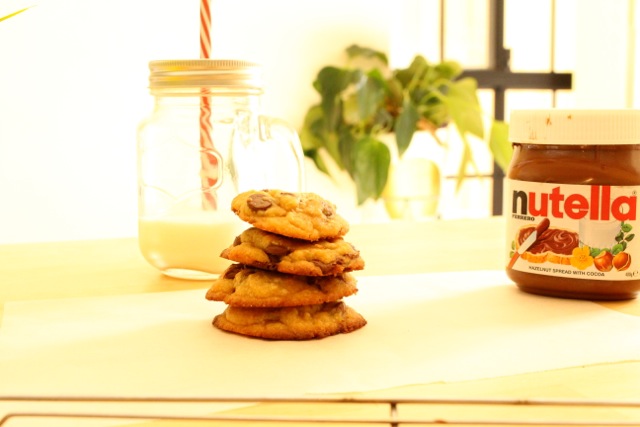
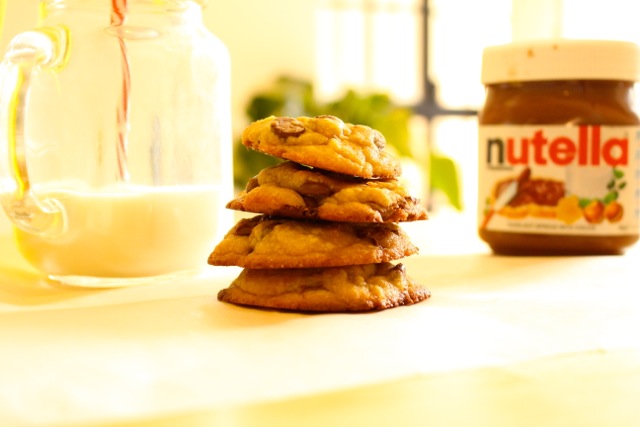
Say what!?  Yes, that’s right…these are chocolate chip cookies, made with brown butter, STUFFED with Nutella (and sprinkled with sea salt!).  !@#$, what a cookie!!

nutella stuffed chocolate chip cookies

I’m sure they’re worth the equivalent of a day’s worth of food in calories, but they are so darn delicious they’re worth it.

Being the new year, I’ve been attempting to stick to healthy eating…yoghurt and berries for breakfast, salad and tuna for lunch….but tonight it was cookies (hell, and wine!) for dinner…what a meal!!!

cookies 7

This recipe was taken from the blog Ambitious Kitchen, and what a fantastic recipe it was!!  I also used a tutorial on how to brown butter from the same blog and found it really easy (I’ve tried other ways in the past and this method worked really well!!).   My last attempt was in my brown butter cake recipe!  You can make brown butter in advance and store it in the fridge also.  Brown butter is seriously the bomb….try it on toast, try it drizzled on steak….even better, try it in cookies!!  Enough about the joys of brown butter, here’s the darn recipe!!

Ingredients:

  • 2 1/4 cup all-purpose flour
  • 1 1/4 teaspoons baking soda
  • 1/4 teaspoon of salt
  • 2 sticks (1 cup) unsalted butter
  • 1 1/4 cup packed dark brown sugar
  • 1/4 cup granulated sugar
  • 1 large egg plus 1 egg yolk
  • 1 1/2 teaspoons vanilla extract
  • 1 tablespoon plain greek yogurt
  • 3/4 cup semi-sweet chocolate chips
  • 1/2 cup milk chocolate chips
  • 1/2 cup dark chocolate chips
  • 1 jar of Nutella, chilled in refrigerator
  • Coarse sea salt for sprinkling

Method:

  1. Whisk together the flour, baking soda, and salt in a bowl and set aside. Melt butter in a saucepan over medium heat. The butter will begin to foam. Make sure you whisk consistently during this process. After a couple of minutes, the butter will begin to brown on the bottom of the saucepan; continue to whisk and remove from heat as soon as the butter begins to brown and give off a nutty aroma. Immediately transfer the butter to a bowl to prevent burning. Set aside to cool for a few minutes.
  2. With an electric mixer, mix the butter and sugars until thoroughly blended. Beat in the egg, yolk, vanilla, and yogurt until combined. Add the dry ingredients slowly and beat on low-speed just until combined. Gently fold in all of the chocolate chips.
  3. Chill your dough for 2 hours in the refrigerator, or place in freezer for 30 minutes if you are super eager, although I cannot promise the same results if you do this.
  4. Preheat the oven to 180 degrees C
  5. Once dough is chilled measure about 1 1/2 tablespoons of dough and roll into a ball. Flatten the dough ball very thinly into the palm of your hand. Place 1 teaspoon of chilled nutella in the middle and fold dough around it; gently roll into a ball — it doesn’t have to be perfectly rolled! Make sure that the nutella is not seeping out of the dough. Add more dough if necessary. Place dough balls on cookie sheet, 2 inches apart and flatten with your hand VERY gently. (Really only the tops need to be flattened a bit!)
  6. Bake the cookies 9-11 minutes or until the edges of the cookies begin to turn golden brown. They will look a bit underdone in the middle, but will continue to cook once out of the oven. Cool the cookies on the sheets at least 2 minutes. Sprinkle with a little sea salt. Remove the cooled cookies from the baking sheets after a few minutes and transfer to a wire rack to cool completely. Repeat with remaining dough.

cookies 2

And that’s it….pure deliciousness!!  Can you think of a way to increase the calorific content of already delicious foods by stuffing them with even more delicious foods! The possibilities are endless!

Calories aside, these are the best cookies I have ever eaten!!

negative self talk

On being your own worst critic

Do you ever feel like you can be your own worst critic?  When someone we love has a setback or a failure we often have all the empathy and care in the world, but when it comes to our own mistakes, it can be surprisingly easy to be hard on ourselves.

self criticismWhy is this?  Why is it ok for others to make mistakes, but not ourselves?  If you feel that you’re your own toughest judge, it may be because of your cognitive schemas (“your what!?”).  Schemas are like a roadmap that help us understand and make sense of the world, and include our underlying beliefs and assumptions.  Those schemas, or road maps, can shape which road we take (our behaviours) and effect how we think about the road we’re on (our thoughts).  We may have schemas related to perfectionism, and unrelenting standards, which can then lead to feelings of pressure, and thoughts around nothing being good enough.  These thoughts and feelings can then affect our behaviour, (for example, working longer hours or avoiding relaxing).

So how can you become your own personal cheerleader and help your inner critic to pipe down!?  Here are a few simple strategies:

1)  Focus on goal mastery, not goal outcomes.  If you’re afraid of failing, why not try and shift your focus to thinking about goals based on what you can learn, or a skill you can build rather than having a focus on the black or white achievement of your goal.  The learning process can become something you can measure and achieve, and will allow you to build your confidence in the small wins.  For example, I might have a goal of improving my leadership skills, rather than obtaining a promotion.  This takes the pressure of “winning or losing” and shifts my perspective to what I can learn, rather than what I can get as an outcome.

2)  Reflect on things you’re grateful for – there is a wealth of evidence that shows that practice of gratitude can lead to increased wellbeing.  Create a gratitude diary, and write down three things you’re grateful for at the end of each day.  This is a great tool to help shift your perspective to the positives in your life.

3)  Ask yourself the question:  “If my best friend X, was in my situation, what would I tell them?”  We often apply one set of standards to ourselves, and one to the others in our lives.  Try thinking about the advice or support you would give someone you care about who was in a similar situation to you – what would you tell them?  How would you care for them?  Can you then apply that same level of care and support to yourself?

4)  Reflect on your strengths.  What are your best qualities and attributes?  When your inner critic pipes up, instead of buying into your own negative thoughts, why don’t you think about how you could apply your strengths to the situation – or if something didn’t go the way you wanted it to, can you think about a time you utilised your strengths really well?

negative self talkDress – Minkpink

Would you try some of these tips?  What strategies work for you feel like your inner critic is holding you back?

what i learned in 2015

A few small things i’ve learned in 2015

Did you spend time making new years resolutions?  This year I decided that before setting more goals that I’d take some time to reflect on 2015.  It’s been a massive year…Dash is now 15 months old, I’ve taken on a new job, got through more of my Masters degree, done some more travel and spent time expanding Pop Therapy…but what is it that I’ve learned from these things?  Here are a few of my rants below!!

1)  I can never be in control of everything….but that’s ok.  The house will never stay perfectly clean, I will never have everything on my “to do” list done, no matter how many times I go to Coles, I’m probably still out of milk, and/or paper towels,  I wanted to go to the gym but I caught a cold, then Dash caught a cold, then Dash cried, then I cried, and the list goes on…but that’s ok.  I spend a good deal of my life agonising over the small things, when really, life is pretty good.

jem 2

2)  Mindfulness is a powerful tool to unhook from worries and anxiety provoking thoughts…it’s easy to learn, practice and integrate into your daily life….finding an activity that helps you to experience flow is a great way to become more connected with the present and engage in mindful awareness.

3)  Being a parent is !@#$ing hard, but seeing Dash’s happy little face and hearing his sweet little voice is enough to melt my heart (even if he did just mash bolognese sauce into my hair and whizz all over the floor!!).  Nonetheless, it takes time to adjust to motherhood, and anyone who tells you it’s a breeze, would be lying!!

4)  Connections with others matter more than everything else.  I’m lucky to have some amazing friends and a truly wonderful husband in my life….without people we care about to share our experiences with, nothing is as special.

5)  If you’re attempting DIY fake tan application (in my case, if you’re looking to go from “translucent”, to “fair”)…use a tanning glove!!  Who knew these things even existed!?  They’re about $5, and would have saved me many a streak and uneven application….a tan glove!!?  who knew!?

6)  Having turned 30 this year, there’s no point in trying to be someone I’m not….be true to yourself, and life is a hell of a lot easier.

7)  I bought this sparkling water machine for my husband Lachy, and who knew how wonderful sparkling water on tap could be!?

8)  Upon becoming a parent, my hobbies and interests went from: guitar, yoga, travel…to: sleep, being able to eat an entire meal without interruption, grocery shopping without a baby etc.  The point of this is that I’m realising how important it is to do the things you care about, even though life is busy.  Doing things you’re passionate about is important for wellbeing, and for our sense of self.

9) I’m all for healthy eating, but these cookies are the bomb

What did you learn in 2015?  Do any of these resonate with you?  The cookies!?

improve listening skills

Try this simple tip to become a better listener

Often in conversations, whether it be at work or at home, we’re often so busy trying to get our own perspectives across, that we don’t really listen to the other person.

Instead of really engaging in dialogue where ideas are exchanged, it’s easy to hold onto our own point of view so tightly that we instead talk at the other person, instead of to them.

When we go into a discussion assuming our perspective is the right one, this can close us off from other possibilities, and prevent us from broadening our perspective through real conversation.

Even the best of listeners can be terrible listeners at times!!

Do you want to become a better listener?  Try this simple tip…

In their new book, ‘Simple Habits for Complex Times” by Jennifer Garvey Berger and Keith Johnston, the authors suggest that as you enter a conversation, to ask yourself the following question: “What can I learn from this person?”

Why not try it the next time you receive feedback from your boss at work, or the next time you’re in an argument with your partner or friend.  By asking yourself this question, you will be forced to really listen to the other person’s perspective, and to better understand their point of view and what it is they’re actually trying to tell you.  Once you learn to hold your own perspective a little less tightly and really listen, you may even learn something!!

Would you try this?  Do you have any tips for being a better listener?

Chocolate Dipped Peanut Butter Cookies with Pretzels

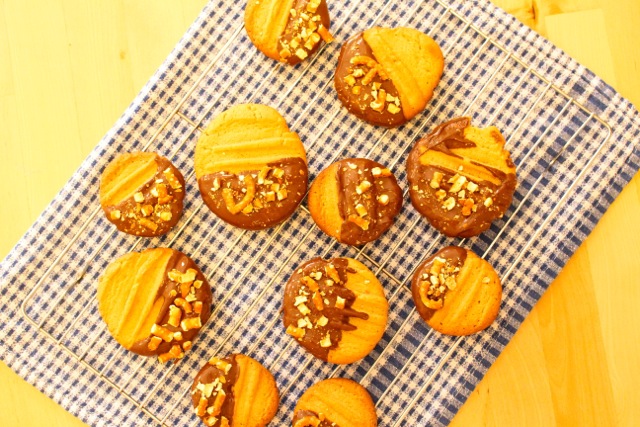
I love baking (and yes, eating!) cookies around the holiday season (actually, around all of the seasons!)!!  Usually it’s the classics for Christmas time, like Gingerbread and shortbread, but this year I thought I’d try something different.  I’ve never tried peanut butter cookies before, but how could peanut butter and cookie not just be the most delicious combo ever!!

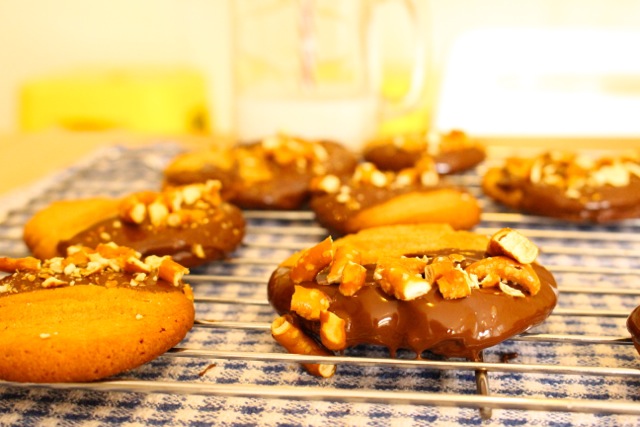
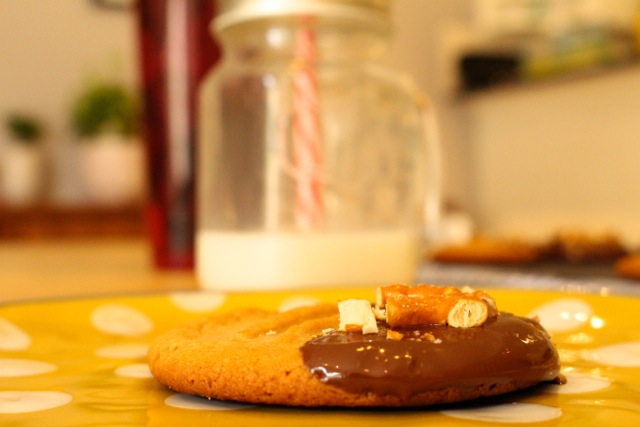
I saw this recipe and had to give it a go, but combined the recipe with this one!!  These cookies were easy to make, and completely delicious, and to make things even better, you then get to go and dip the little beauties in molten chocolate and coat them with pretzel crumbs.  I knew today was going to be a good day!

cookie 4

Ingredients:

  • butter, softened
  • ½ cup smooth peanut butter
  • 1 tsp vanilla essence
  • 230 g(1¼ cups) brown sugar
  • 1 egg, lightly beaten
  • 185 g (1¼ cups) plain flour, sifted
  • ¼ tsp bicarbonate of soda
  • 1 pack dark chocolate melts
  • 1 bag pretzels

Method

  1. Place butter, peanut butter, brown sugar and vanilla into a mixing bowl. Using an electric mixer beat until light and creamy.
  2. Add egg, beat until well combined. Stir in sifted flour and bicarbonate of soda. Mix until a soft dough forms. Cover bowl with plastic wrap and refrigerate for 20 minutes.
  3. Preheat oven to 170°C.
  4. Roll mixture into 2.5 cm-sized balls. Place onto baking paper-lined trays, allowing room for spreading. Lightly press down onto each cookie with a fork.
  5. Bake for 15-20 minutes. Remove from oven and allow to cool on trays.
  6. Once cookies cool, melt dark chocolate in a bowl over simmer water on the stove (make sure the bowl doesn’t touch the water)
  7. Dip cookies into the chocolate, then crumble pretzels over the chocolate

cookie 2 cookie 1

All that’s left is to eat them!!  Luckily this Christmas, I got a new bike (pictured here) and can work these off!!)  What are your favourite cookies?

Jem Bike 1

Increase your wellbeing through doing the things you’re passionate about

girls on bikes

What are you passionate about?

Passion can be defined as a strong inclination toward a self defining activity that we like, love or find important, in which we invest time and energy  (Rousseau & Vallerand, 2003).

Engaging in a meaningful activity that we’re passionate about and choose to do, increases our psychological well-being, including our levels of life satisfaction, sense of meaning in life and vitality, and decreases anxiety and depression.  Performing activities we’re passionate about has also been shown to increase our feeling of energy whilst doing the activity and afterwards (Rousseau & Vallerand, 2003).

vintage bikes

I find that with age (*cries*) comes more responsibility, more work and more time spent caring for the needs of others as opposed to time spent caring for our own needs.  It’s easy to disconnect from activities we previously enjoyed and were passionate about!!  But….. with the above information in mind, doing the things we enjoy are more likely to make us feel better psychologically and feel more vitality….which will in turn possibly make us more effective workers and better able to engage in relationships with our loved ones!!

passion

However, a note of caution!! (Rousseau & Vallerand, 2003) distinguish between two types of passion.  Harmonious passion, and obsessive passion.

Harmonious passion results when an individual freely performs any activity without any contingency associated with it – the rewards are intrinsic and the activity fits in with our sense of self and identity.  Harmonious passion helps us to want to willingly engage in the activity, and motivates us to freely engage in the activity because we love and enjoy it and it feels “like me.”  Harmonious passions allow is to experience concentration, positive emotions and flow.  We are also more likely to be experience harmonious passion when we recognise and are using our signature strengths.

Obsessive passion on the other hand occurs when we are consumed by engaging in an activity, with extreme perseverance.  The activity often has contingencies surrounding it, such as social acceptance or self esteem.  The passion can become controlling and consuming, and may result in us pursuing the activity above other needs – this may result in feelings of cognitive dissonance and negative emotions!! Vallerand et al (2006) showed that harmonious passion is positively correlated with vitality, but obsessive passion is not!   Can you think of an example of someone with an obsessive passion?

Do you spent time doing the activities you love?  Which activities help you to experience a feeling of flow? How can you make more time for activities you’re passionate about in order to increase your wellbeing?

Do you have an obsessive passion that conflicts with other areas of your life?  What do you value about this obsessive passion?  How does this relate to your other values?   What need does this passion fulfill?  Can you meet that need any other way?  Can you think about how you can better integrate this activity in with your other values and who you want to be?

What are you passionate about?  Music?  Fitness?  Coffee!?  My coffee passion may just be obsessive….not harmonious!!!  Need….more….coffee…

wellbeing and passion

Playsuit - French Connection
Sunglasses - Quay Eyewear
Hat - Seed Heritage
Skin care

My Skincare Routine

I’ve had a lifelong battle with my skin, but feel like I’ve finally found a routine that works for me.  I thought by the age of 30, things would be easy, but unfortunately I have combination skin, that is very sensitive, and prone to breakouts if I use any kind of moisturiser…and I mean any!!  Over the years I have tried every type of moisturiser, whether it be labelled “non-comedogenic”, a cream, a gel, a lotion, whatever it is, it will still block my pores.  I’ve tried every brand and every price range, but still have the same problem!!

Here are a few key things I’ve learned to help keep my skin clear:

  •  I use  a very gentle cleanser….when I’ve switched to harsher cleansers, I then suffer from breakouts.
  • At night time, I use an oil or serum, not a lotion or cream
  • I avoid harsh sunscreens, and use an oil-free sunscreen specially for the face, or try and avoid the sun or always wear a hat instead.
  • Twice a week, I exfoliate, using a very gentle exfoliant, and use a clay mask, to keep my pores from clogging up.
  • I drink lots of water! (Luckily this is a habit I have always had).

This is what I use:

Nighttime:  Fresh Soy Face Cleanser, followed by Aesop Fabulous Face Oil. I also regularly use Cetaphil cleanser as it’s super gentle and also extremely cheap!!  The only downside I’ve found with Cetaphil is that it won’t remove all makeup – the Fresh cleanser seems to leave my face feeling cleaner without over stripping it!!  Aesop Fabulous Face Oil can also be a bit expensive, so as an alternative, I also find plain Rosehip oil works really well for me.

Morning:  Fresh Soy Face Cleanser, followed by Clinique Sheer City Block, Daily SPF Face Protector, Oil Free.  If I’m going straight to work and unlikely to be in the sun, I will use no moisturiser, or a very light serum.

Twice a week:  I exfoliate with Dermalogica Daily Microfoliant…which is a really gentle, powder based scrub.  I then use this soothing chamomile mask from Aesop…it feels cool and soothing, and hardens to a clay like texture…I leave it on for 10, then remove.

For breakouts, I use this spot cream by Ella Bache, and have found it to be one of the best I’ve tried.  It feels really soothing, and works quickly…even on those under the surface pimples.

So there it is!!  A simple routine, but it works for me….when I’ve tried to add additional steps (ie, using a toner), I often find this results in more breakouts, so simple is best for me.  What are your all time favourite skincare products?

Lemon Tart

Little Lemon Tarts

So it’s been a while since I’ve posted a lemon flavoured baked good on the blog….far too long I say!!

I’ve finally finished uni for the semester and what better way to celebrate with the baking and eating of (too many of) these babies!!

I looked at a few different recipes, and wanted to have a go at making the pastry myself….and this recipe was simple to follow and turned out beautifully!!


lemon tart 5 copy

Recipe from Butter Baking

Ingredients:

For the tart pastry:

  • 180g unsalted butter (6 oz)
  • 6 tbsp water
  • 2 tbsp vegetable oil
  • 2 tbsp sugar
  • Pinch of salt
  • 2 cups flour (300g, 10 oz)

For the lemon filling:

  • ¼ cup plain flour (35g, 1¼ oz)
  • 1 cup sugar (220g, ½ pound)
  • ½ cup lemon juice (125ml, 4 oz, about 3 lemons)
  • zest from 1 lemon, grated
  • 3 eggs
  • 1 egg yolk
  • pinch of salt

Method

  1. To make the tart pastry, preheat the oven to 200 C (400 F) and get out two mini muffin pans.
  2. Place the butter, water, oil, sugar and salt in an overproof bowl.
  3. Put the bowl in the oven for about 15 minutes, until the butter is melted, bubbling, and just beginning to brown around the edges.
  4. Carefully remove the bowl from the oven and dump in the flour. Stir quickly, until the dough comes together and pulls away from the side of the dish.
  5. Put a teaspoon of dough into one mini muffin hole, and press it into the base and up the sides using your fingers. Repeat until all the dough has been used.
  6. Prick the dough with a fork once or twice.
  7. Bake for 8 – 12 minutes, until the pastry is golden brown all over.
  8. Remove from the oven and allow to cool slightly.
  9. To make the tart filling, reduce the oven to 150 C (300 F).
  10. Combine the flour and sugar in a medium mixing bowl. Add the lemon juice and zest and mix to dissolve the sugar.
  11. In a separate bowl, whisk the eggs and the egg yolk with salt.
  12. Add the eggs into the lemon and sugar mixture and whisk until well combined.
  13. Pour the filling into each pastry case
  14. Bake for 5 – 10 minutes, until the centers are just set


lemon tart 2 copy

They’re lemony, they’re delicious…what more could you want!!  Serve with a cup of tea!!

improve learning

Boost your learning power with this simple tip!!

Learning a new skill is difficult for the best of us, particularly as we age *sighs*…..but there is a simple strategy you can try which can help you to learn more efficiently.

Simply by mixing up the way you learn with interleaving, you can experience large gains in your learning.

Interleaving means practising or learning different skills in quick succession.  Often when learning, we traditionally focus on learning one task at a time.  For example, if I was learning to play a new song on the guitar, I might spend an entire practice session on the one song only…. but if I was interleaving, I might practice multiple techniques in a practice sessions – for example, scales, fingerpicking, or even work on a few different songs in the same session.

A study by Rohrer et al., 2015, showed that children learning maths who used interleaving, performed 25% better than students learning one technique at a time (such as spending an entire lesson on fractions!), one day later.  A month later the children were re-tested, and the interleavers performed 76% better than students practising one task at a time.

The implications of this are that whether you are learning a new skill, such as learning to play golf, or going back to university for further education, by shaking up how you practice and learn, you can learn much better.

You might feel stuck when learning a particular task or skill, but by moving on to a different task in the same session, it may actually help you to learn the first one!!

Do you interleave?  What works best for you when learning a new skill?