Jem Bike 1

Increase your wellbeing through doing the things you’re passionate about

girls on bikes

What are you passionate about?

Passion can be defined as a strong inclination toward a self defining activity that we like, love or find important, in which we invest time and energy  (Rousseau & Vallerand, 2003).

Engaging in a meaningful activity that we’re passionate about and choose to do, increases our psychological well-being, including our levels of life satisfaction, sense of meaning in life and vitality, and decreases anxiety and depression.  Performing activities we’re passionate about has also been shown to increase our feeling of energy whilst doing the activity and afterwards (Rousseau & Vallerand, 2003).

vintage bikes

I find that with age (*cries*) comes more responsibility, more work and more time spent caring for the needs of others as opposed to time spent caring for our own needs.  It’s easy to disconnect from activities we previously enjoyed and were passionate about!!  But….. with the above information in mind, doing the things we enjoy are more likely to make us feel better psychologically and feel more vitality….which will in turn possibly make us more effective workers and better able to engage in relationships with our loved ones!!

passion

However, a note of caution!! (Rousseau & Vallerand, 2003) distinguish between two types of passion.  Harmonious passion, and obsessive passion.

Harmonious passion results when an individual freely performs any activity without any contingency associated with it – the rewards are intrinsic and the activity fits in with our sense of self and identity.  Harmonious passion helps us to want to willingly engage in the activity, and motivates us to freely engage in the activity because we love and enjoy it and it feels “like me.”  Harmonious passions allow is to experience concentration, positive emotions and flow.  We are also more likely to be experience harmonious passion when we recognise and are using our signature strengths.

Obsessive passion on the other hand occurs when we are consumed by engaging in an activity, with extreme perseverance.  The activity often has contingencies surrounding it, such as social acceptance or self esteem.  The passion can become controlling and consuming, and may result in us pursuing the activity above other needs – this may result in feelings of cognitive dissonance and negative emotions!! Vallerand et al (2006) showed that harmonious passion is positively correlated with vitality, but obsessive passion is not!   Can you think of an example of someone with an obsessive passion?

Do you spent time doing the activities you love?  Which activities help you to experience a feeling of flow? How can you make more time for activities you’re passionate about in order to increase your wellbeing?

Do you have an obsessive passion that conflicts with other areas of your life?  What do you value about this obsessive passion?  How does this relate to your other values?   What need does this passion fulfill?  Can you meet that need any other way?  Can you think about how you can better integrate this activity in with your other values and who you want to be?

What are you passionate about?  Music?  Fitness?  Coffee!?  My coffee passion may just be obsessive….not harmonious!!!  Need….more….coffee…

wellbeing and passion

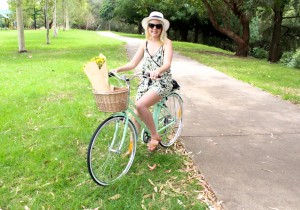
Playsuit - French Connection
Sunglasses - Quay Eyewear
Hat - Seed Heritage
improve learning

Boost your learning power with this simple tip!!

Learning a new skill is difficult for the best of us, particularly as we age *sighs*…..but there is a simple strategy you can try which can help you to learn more efficiently.

Simply by mixing up the way you learn with interleaving, you can experience large gains in your learning.

Interleaving means practising or learning different skills in quick succession.  Often when learning, we traditionally focus on learning one task at a time.  For example, if I was learning to play a new song on the guitar, I might spend an entire practice session on the one song only…. but if I was interleaving, I might practice multiple techniques in a practice sessions – for example, scales, fingerpicking, or even work on a few different songs in the same session.

A study by Rohrer et al., 2015, showed that children learning maths who used interleaving, performed 25% better than students learning one technique at a time (such as spending an entire lesson on fractions!), one day later.  A month later the children were re-tested, and the interleavers performed 76% better than students practising one task at a time.

The implications of this are that whether you are learning a new skill, such as learning to play golf, or going back to university for further education, by shaking up how you practice and learn, you can learn much better.

You might feel stuck when learning a particular task or skill, but by moving on to a different task in the same session, it may actually help you to learn the first one!!

Do you interleave?  What works best for you when learning a new skill?

Mindfulness

Be Mindful

I’m a notorious multi-tasker.  At the moment, I’ve got a load of washing on the go, am entertaining an eight month old baby, sterilising some bottles, writing a blog post, studying for a uni exam and have some trashy TV on in the background.  Did I mention I also just ate some dark chocolate at so fast a pace I can barely remember eating it?  Oh, and where did the glass of wine I just poured go?  That’s right…I drank it at rocket speed (woooo)!!  If you’re anything like me, you might on occasion (or on a regular basis…) find yourself on auto-pilot, racing through life so busy thinking about all the things you have to do that you lose sight of the present moment, and often miss out on fully engaging in the task at hand.

Mindfulness

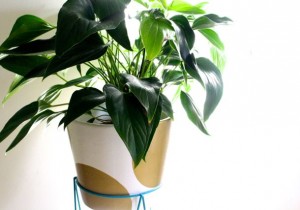
Pot and pot stand - Kmart

Do you ever find yourself so caught up in your thoughts that you miss out on all sorts of exciting things? Like realising that you’re halfway through a conversation with a friend, but you haven’t actually listened because you’re thinking about what a mess your house is, or you’re playing with the kids, but realise that instead of really engaging, you’re thinking about work stuff, financial stress etc…

This is where mindfulness comes in.  Mindfulness can be defined as “Paying attention on purpose, without judgment to our experience as it unfolds moment by moment” (Kabat-Zin, 1990).

Through regular practise of mindfulness, we can learn to remain in the present, allowing us to fully engage in the activity we are doing.  Mindfulness allows us to “unhook” from our thoughts so that we can focus on what’s going on around us.  A second key component of mindfulness is openness and non-judgement – this means that whilst even the most mindful of people will experience stressful thoughts, they are able to appraise them through a lens of curiosity, seeing those difficult thoughts as simply thoughts, which are neither good or bad, without the judgement and loading we usually attach to our thinking (the way we appraise our thinking subsequently affects the emotions we feel!!).

Mindfulness isn’t designed as a relaxation technique, but many people find that they feel more relaxed once they begin practising mindfulness.

“Great, where do I sign up?” you say!  Just remember, like any new skill, learning mindfulness takes practice, practice, practice!!  If you can allocate five to ten minutes a day to practice, you will be well on the way to improving your skills in mindfulness.

“but I barely have five minutes to shower, let alone sit and meditate!!” you say.  Fear not – there are simple ways you can factor mindfulness practice into activities that you are already doing on a daily basis!!   Here are some suggestions, but you can probably come up with some of your own once you get started.

  • Choose a particularly devious food that you enjoy (like a piece of dark chocolate).  Put the piece of chocolate in your mouth, and instead of eating it faster than you can say “pass me some more,” try savouring the experience of eating the chocolate.  Bring your full awareness to the chocolate.  Notice the depth of flavour.  Notice the smell of the chocolate.  Notice the texture of the chocolate change as it melts in your mouth.  Each time you find your mind wandering, gently unhook from the distracting thoughts, by bringing your awareness back to the sensory experience of eating the chocolate.  If you get distracted from the delicious task at hand, remember that this is completely normal, and continue to draw your awareness back to the delicious, delicious chocolate.  Repeat, as often as required 😉
  • Choose a tedious housework task that you don’t love, but have to do most days (this might be washing the dishes or hanging out the washing).  We will use the example of washing the dishes – as you are washing the dishes, focus your awareness on the sound of the running water as you fill the sink.  Notice the sound of the bubbles as you pour in the detergent.  Notice the warmth of the water as you immerse your hands in to begin scrubbing the dishes.  Listen for sounds – the clink of plates, the scrape of a fork on the bottom of the sink.  Notice the feeling of the dishes, the slipperiness of the detergent, the feel of the bubbles.  What can you feel?  What can you see?  Can you smell the scent of the detergent?  As you do this task, your mind will wander (time and time again).  Each time you notice that your mind has wandered,  simply notice this has happened, and without judgement of the thoughts that have swept you away, bring your awareness back to the experience of the task of doing the dishes.  Think of the task as an anchor, which you can use to bring your awareness back to the present, each time your mind wanders.  If you find yourself caught up in your thoughts, try not to judge or appraise your thinking – if you need to label your thoughts, simply label them as “thinking,” then bring your awareness back to the feel, the sound, the smells etc of the task at hand.

So here are two techniques for “mindfulness on the fly.” They don’t take a lot of time, and can be factored in to your every day experiences.  Just remember, the more you practice mindfulness, the better you will get!!

Would you try these techniques?  I’d love to hear how you go.

Get your flow on

Do you ever become so absorbed in an activity that you lose sense of time and space and get lost in what you’re doing?  Chances are you’re experiencing flow!

Flow happens when we are fully engaged in an activity.  We feel in control –  it’s like time stops, and you get swept up in the activity you’re doing – no more thinking about the housework, or what to eat for dinner – you’re well and truly engaged in the task at hand!!  It might happen when we’re performing a hobby like reading or yoga, or it might happen when you’re working on a task that is challenging, like an important work task or university assignment.

There are many psychological benefits to experiencing flow!!  These include increased well-being, greater work/life satisfaction, reduced stress and anxiety, greater sense of self, increased productivity and increased self esteem.  Short term, we’re likely to experience feelings of pleasure, happiness and satisfaction.

flow and wellbeing

So what are the key elements that make flow happen!?

  • Participating in an activity that challenging and uses your skills to the fullest! If the task is too easy, or too difficult, then flow is unlikely to occur.    With this in mind, thinking about your strengths and what you are good at, might help you to choose activities that lead you to experience flow.
  • Having clear goals – is your goal to practise a 30 minute set list to be able to play those songs with confidence at tonight’s gig?  Is it to conduct research on positive psychology to write a university paper?  To spend one hour at the gym to relax?  Whatever it is, make it clear and measurable and think about what the purpose of your activity is.  Think about what you need to achieve your goal including resources, and when and where you will carry out your flow enhancing activity.
  • Having clear and immediate feedback – can you assess your performance as you complete the task?  If not, can you engage in reflection following the activity to think about what you did well or could improve on?  Can a coach,supervisor or mentor give you feedback from observation?

With this in mind, which activities do you get lost in?  It might be playing sport, playing a musical instrument, reading a book (or even, I hate to say….a work task!!).  Can you find a way to engage in this activity every day?  Whilst you might feel like you don’t have time to do things you enjoy, the positive effects of experiencing flow are likely to make you feel happier and more productive when doing the mundane stuff!!

Doing this post made me realise how much I miss picking up my guitar…it’s amazing how time disappears when you’re doing something you love!!  How can you make more time for flow enhancing activities?

flow and wellbeing


Lipstick: Mac - Pink Pigeon
Sedentary behaviours linked to anxiety

An everyday habit that could be increasing your anxiety

There is so much evidence out there which shows that sedentary activities have a poor impact on our physical health….but what about our mental health?  A new study by Taychenne et. al (2015) has found that there is a link between anxiety, and sitting down all day.

Activities such at watching TV, working at a computer or playing video games may have a link to anxiety. Results showed that the more sedentary the behaviour, the great anxiety experienced.

We don’t know why sedentary behaviours lead to anxiety, but possible reasons may include central nervous system arousal and disturbed sleep, social withdrawal from long term engagement in behaviours such as video games, or lack of physical exercise which can displace anxiety.

Whilst more evidence is needed in this area, there is a multitude of evidence out there that supports the relationship between physical activity and positive mental health.

Are you going through stress or worry?  Whilst it might seem tempting to curl up on the couch and watch TV, or stay in bed with your laptop all day, this may make your anxiety worse!  Physical activity is a great stress buster, and a simple walk every day is an excellent way to keep physically and mentally healthy!

Can you think of some different ways to de-stress and relax, whilst avoiding the temptation of the couch?


hope, goals, psycap

Are you a High Hoper?

Hope is a psychological construct which is receiving more and more attention in the field of positive psychology.  Hope helps us to achieve our goals in the face of adversity and gives us the willpower to keep going.  High hopers have higher levels of well-being including improved relationships and performance and decreased negative emotions (Worgan, 2013).

Hope is different from optimism.  Optimism can be defined as the extent to which people hold generable favourable expectancies for their future (Carver, Scheier & Segerstorm, 2010).  Hope can be defined as the extent to which individuals can find pathways to reach their goals, and become motivated to reach those pathways (Synder, Rand & Sigmon) and is more goal specific than optimism.

There are three key elements to hope:

1)  Goal directed thinking – our perception of our short and long term goals

2)  Pathways thinking – or the ability to find different paths to reach our goals

3)  Agency thinking – the motivation and will power to work towards our goals.  We can call this our determination to achieve our goals!!

So how can we increase our levels of hope?  Here are a few ideas!!

  • Do a brainstorming session, writing down as many possible paths to achieving your goal as possible.
  • Have a discussion with a friend or colleague – share your goal and ask how they would achieve the goal if it were their own!!
  • Write a list of five reasons why achieving your goal is important.
  • Reflect on your values.  What are your top three values?  Go back to your goal and relate it to your top three values.
  • Imagine you have achieved your goal.  How would this feel?  What would be different in your life?  Make a list of the positive changes that achieving your goal would bring!!

Are you working on achieving an important goal?  Would you try these ideas?  I’d love to hear about your experiences!!

Positive Ageing

The thought of ageing is a scary concept for many of us.  We’re constantly bombarded with messages about the beauty of youth, and the concept of old age is regarded by many as a time for dependency and losing the ability to enjoy the things one previously loved.

The way we age however, is heavily shaped by our perceptions around ageing.

Research in the field of positive psychology is extending to examine well-being during old age.  Research by psychologist Carol Ryff describes the most important criteria for being well adjusted during old age as:

  • Being socially responsible and interested in others
  • Having the capacity to accept change
  • Being compassionate, caring and responsive to others

Harvard Professor of Psychiatry, Dr George Vaillant, in his book Positive Ageing, conducted research which followed 824 people for 60 years, from teen years to becoming grandparents! Based on this, Valliant outlines several predictors, which if adhered to before the age of 50, can lead to good physical and mental health at ages 70, 80 and beyond:

  • Positive relationships, including a good marriage
  • Alcohol used in moderation only
  • Creativity and playfulness
  • Learning to make younger friends and form new relationships as older friends are lost
  • Pursuing education and achievement
  • Ability to find creative ways to cope with difficult situations
  • Altruistic behaviour
  • Staying physically active
  • Being a non-smoker
  • Having a healthy weight

Some amazing research was done by Ellen Langer, Harvard Psychology Profession, in her “Counter Clockwise” study.  Dr Langer had elderly men in their 70’s and 80’s attend a one week retreat where they were required to live like it was 1959!!  The study involved the men reading only material from the time of 1959 or before, discussing the politics of the time and writing letters as their younger selves in 1959 to share with the other participants.  At the end of the study, the men were evaluated as appearing taller, having better posture, having higher scores on intelligence tests and being perceived as younger by others viewing photographs of them.  The researcher, Dr Langer, even reported that at the end of the week she was playing football with elderly men who had previously been walking with canes!!  Some of the men who had been dependent on family members to help them with many activities of daily living were functioning independently during the retreat, including helping with meals and tidying up.

What amazing evidence to show that having a “young” mindset can have massive impacts of the physical body!!

Will you continue to maintain a “young” mind as you age?  Do you have grandparents/parents/friends/relatives who have achieved amazing things in their old age?  I would love to hear your stories!!

Acts of kindness can boost your happiness

Can doing something kind for others make you feel happier?

In a study by Lyubomirsky, Tkach & Sheldon (2004) students were asked to perform five acts of kindness each week, for a period of six weeks.  The type of acts included things like visiting an elderly relative, donating blood, helping a friend with a paper, writing a thankyou note etc.  Students completed measures of well-being before and after the six week period.

The results showed that the well-being of the students increased following the intervention….however, the researchers found that the timing of the acts of kindness was crucial…..only the students who did all of their acts of kindness in a single day each week showed increased well-being, not the students who spread their generosity over the entire week!!

So why is this!?  A reason may be that because many of the kind acts performed by the students were small ones, spreading them out over a whole week may have decreased their power, or made them harder to distinguish from day-to-day habitual kind behaviours.

This fits in with another study by Baumester, Vohs, Aasker & Garbinsky (2013) which outlined that helping others is not correlated with happiness, but that people who help others have higher levels of meaning in their lives than people who don’t help others.

What does this mean?  Helping others is related to higher levels of meaning in our lives and can help our well-being, but several small acts of kindness over one day are more likely to achieve this!!

Would you do a weekly “kindness” day?   How might you do it?  I would love to hear your ideas!!

How to Beat Performance Anxiety

Brooks (2013) conducted a series of studies looking at performance anxiety across different settings including giving a speech, singing karaoke and completing a maths test.
The studies found that individuals who “reappraised” their anxiety into thoughts of excitement, performed better than people who told themselves to remain calm.
Trying to deal with pre-performance anxiety?  Try re-framing your feelings of anxiety into thoughts of excitement!  Try some positive self talk with simple phrases like “lets get excited!” or “I can’t wait to do this!!”  This is more effective than attempting to calm down.
Also – remember, we have an optimum level of anxiety that helps us to perform better! A little bit of nerves may actually help you!!  (Just don’t tell yourself to calm down!!)
What techniques do you use to beat pre-performance anxiety?  Would you try this technique?mindy1
baby Dash

How you respond to your baby can predict academic success years later

A new study by Raby et al (2014) has found that sensitive parenting, including responding to a child’s signals quickly and appropriately during the first three years of their life can lead to increased academic performance and better outcomes, even into the child’s 20’s and 30’s.

Researcher’s observed parents and babies during the first three years of the babies’ lives.  Following this, standardised academic tests were administered.  Results showed that the children who received sensitive parenting, showed increased academic performance.

This highlights the importance of interactions between parents and babies in the early years of their childhood!!

What’s your parenting style?